
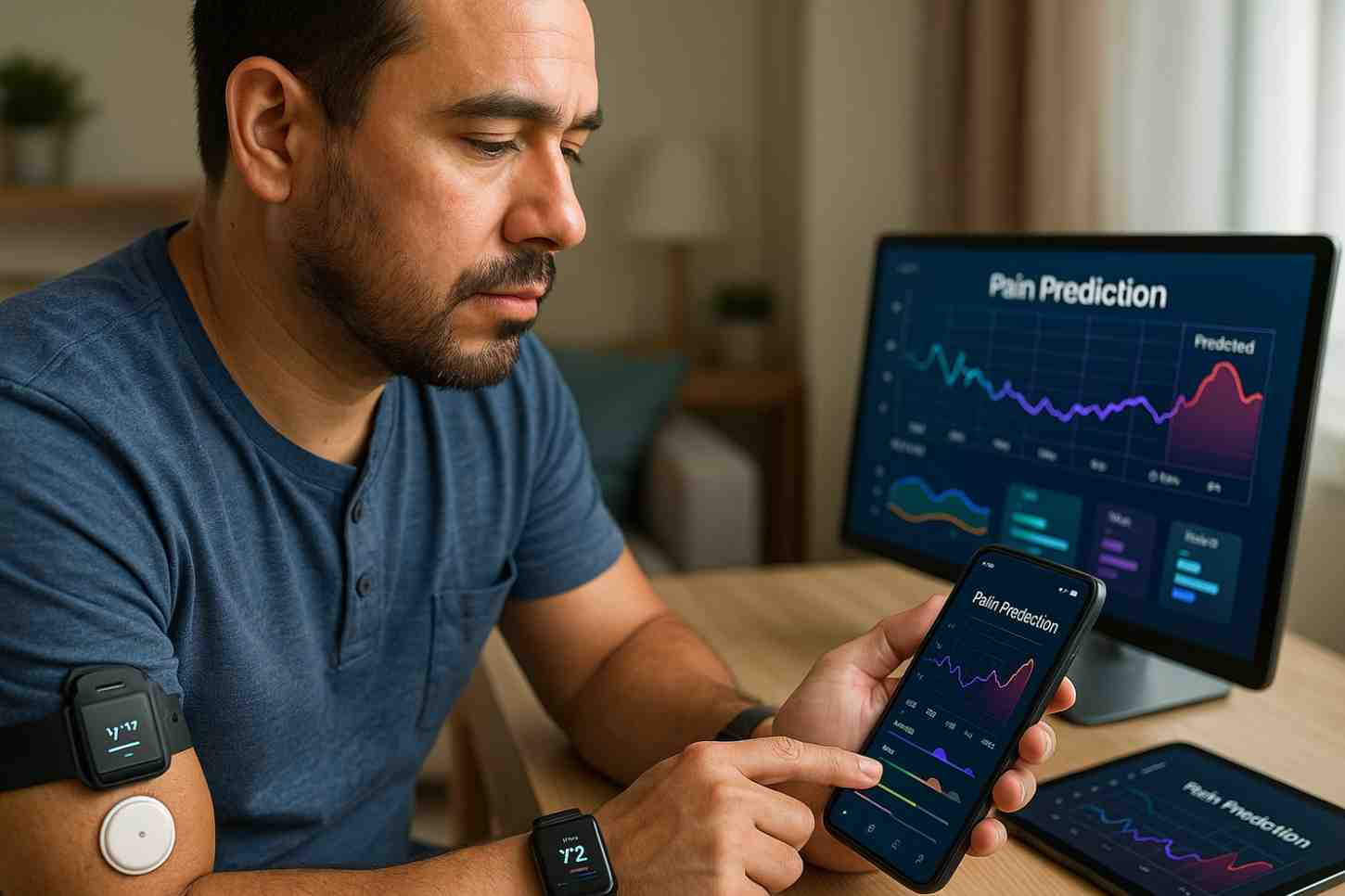
Wearable Technology: Smart Devices That Predict Pain Flares
Wearable Technology: Smart Devices That Predict Pain Flares
Chronic pain sufferers often describe feeling helpless against unpredictable pain flares that disrupt daily life without warning. Imagine if you could receive a notification hours before a pain flare begins, allowing time to take preventive medication, cancel strenuous activities, or implement coping strategies before severe pain hits. This scenario is rapidly becoming reality as wearable biosensor technology combined with artificial intelligence learns to recognize the subtle physiological signals that precede pain exacerbations. At Pain Management Laredo, we're excited about wearable pain prediction devices that promise to transform chronic pain from an unpredictable crisis into a manageable condition. For patients in Laredo, TX and Webb County, these emerging technologies offer hope for regaining control over pain and planning life with greater confidence and reduced suffering.
The Promise of Predictive Pain Management
Traditional pain management is largely reactive—treating pain after it occurs rather than preventing flares before they begin:
Current Reactive Approach Limitations
- Crisis Management: Most chronic pain patients take rescue medications only after pain has escalated to severe levels, when it's harder to control and function is already significantly impaired.
- Pattern Recognition Failure: While some patients identify triggers (weather changes, stress, certain activities), many pain flares seem random and unpredictable, making preventive strategies difficult.
- Delayed Treatment: By the time patients recognize a flare and take medication, physiological changes are already underway, requiring higher doses and longer recovery times.
- Activity Planning Challenges: Unable to predict pain levels, patients either avoid activities entirely out of fear or overcommit and suffer severe flares, limiting quality of life and independence.
- Medication Optimization Difficulties: Without data on what precedes flares, physicians struggle to optimize preventive medication timing and dosing.
- Sleep Disruption: Pain flares often begin during sleep, waking patients and preventing restorative rest critical for pain management.
Advantages of Predictive Monitoring
- Proactive Intervention: Receiving advance warning allows taking preventive medication before pain intensifies, when lower doses are more effective.
- Activity Modification: Patients can adjust schedules, delegate tasks, or reschedule commitments on predicted high-pain days while fully engaging on predicted low-pain days.
- Reduced Catastrophizing: Knowing flares are temporary and predictable reduces fear and anxiety that amplify pain perception.
- Personalized Insights: Continuous monitoring reveals individual patterns invisible through periodic clinic visits or patient recall.
- Treatment Optimization: Objective data helps Pain Management Laredo physicians fine-tune medication timing, identify effective preventive strategies, and assess treatment responses.
- Quality of Life Improvement: Greater predictability and control over pain dramatically improves psychological well-being, sleep quality, and life satisfaction.
Pain Management Laredo recognizes that shifting from reactive to predictive pain management represents a fundamental advancement in chronic pain care, potentially transforming the experience of living with pain for our Laredo patients.
How Wearable Pain Prediction Works
Smart wearable devices integrate multiple technologies to forecast pain exacerbations:
Biosensor Technology
- Heart Rate Variability (HRV): Sophisticated analysis of beat-to-beat heart rate intervals reveals autonomic nervous system changes that often precede pain flares by hours, detecting stress and inflammation markers.
- Skin Conductance: Electrodermal activity sensors measure subtle changes in skin electrical properties reflecting autonomic arousal, stress responses, and inflammatory processes.
- Temperature Monitoring: Continuous skin temperature tracking detects inflammatory changes and autonomic dysregulation associated with impending pain increases.
- Accelerometry and Movement: Three-axis motion sensors track activity patterns, sleep quality, gait changes, and protective movement behaviors that predict or trigger pain flares.
- Sleep Architecture: Monitoring sleep stages, duration, and quality—poor sleep is both a predictor and consequence of pain exacerbations.
- Respiratory Rate: Breathing pattern changes reflect stress, anxiety, and autonomic function alterations that precede pain increases.
- Blood Oxygen Saturation: In some wearables, continuous pulse oximetry detecting changes in tissue oxygenation relevant to certain pain conditions.
Artificial Intelligence Analysis
- Machine Learning Models: AI algorithms trained on individual patient data learn the unique combination of physiological signals that precede that person's pain flares, creating personalized prediction models.
- Pattern Recognition: Neural networks identify complex patterns across multiple biosensor streams that human observers would miss, detecting subtle changes in the hours or days before pain escalates.
- Temporal Forecasting: Time-series analysis predicting not just whether a flare will occur but when, allowing appropriately timed interventions.
- Context Integration: Advanced systems incorporate environmental data (weather, barometric pressure, air quality), schedule information (upcoming stressful events), and user-reported data (mood, stress levels) into predictions.
- Continuous Learning: AI models improve accuracy over time as they accumulate more data from each user, refining predictions based on what physiological patterns actually preceded previous flares.
- Confidence Scoring: Sophisticated systems provide probability estimates and confidence intervals, distinguishing high-certainty predictions from lower-confidence warnings.
User Interface and Alerts
- Smartphone Apps: Companion applications displaying current pain risk, trends over time, identified triggers, and personalized recommendations.
- Predictive Notifications: Alerts sent hours or days before predicted flares, with severity estimates and suggested interventions.
- Visual Dashboards: Graphs showing biosensor trends, pain patterns, and correlations between physiological signals and pain levels.
- Provider Integration: Data sharing with Pain Management Laredo physicians, enabling informed treatment adjustments based on objective long-term monitoring.
- Intervention Tracking: Apps allowing patients to log preventive actions and subsequent outcomes, helping AI learn which interventions work for each individual.
Current Wearable Pain Technologies
Several wearable pain monitoring and prediction systems are in development or early deployment:
Research and Clinical Devices
- PainQx: Research platform using wrist-worn biosensors to monitor multiple physiological signals in chronic pain patients, with AI models showing promise for predicting pain increases in fibromyalgia and rheumatoid arthritis.
- Quell: FDA-cleared wearable for chronic pain management using transcutaneous electrical nerve stimulation (TENS) while simultaneously tracking sleep, activity, and therapy usage to optimize treatment.
- University-Developed Prototypes: Academic research teams developing custom wearables specifically for pain prediction in conditions like migraine, lower back pain, and inflammatory arthritis.
- Empatica Embrace: Originally developed for seizure detection, being adapted for chronic pain monitoring with physiological signal analysis.
- Chronic Pain Management Apps: Commercial applications (Manage My Pain, Curable, Pain Coach) integrating with consumer wearables to track pain patterns and identify correlations with activity, sleep, and physiology.
Adapted Consumer Wearables
- Smartwatch Integration: Research demonstrating that data from commercial smartwatches (Apple Watch, Fitbit, Garmin) combined with AI can predict pain flares, making technology accessible at lower cost than specialized medical devices.
- Oura Ring: Sleep and activity tracking ring being used in pain research, with studies showing HRV and sleep data correlating with next-day pain levels.
- WHOOP Strap: Athletic performance monitor tracking HRV, sleep, and recovery, being explored for chronic pain prediction based on recovery metrics.
- Fitbit Health Metrics: Consumer fitness trackers providing HRV, temperature, and sleep data that research suggests may predict pain exacerbations when analyzed with appropriate AI.
While widespread clinical adoption is still emerging, Pain Management Laredo follows these developments and anticipates incorporating validated wearable pain prediction systems into comprehensive care for Laredo patients as the technology matures.
Evidence for Pain Prediction
Growing research demonstrates feasibility of wearable biosensor pain forecasting:
Published Research Findings
- Migraine Prediction Studies: Research using wearable biosensors to predict migraine onset 1-2 days in advance achieved 70-85% accuracy, detecting HRV changes and sleep disruption before headache begins.
- Fibromyalgia Monitoring: Studies showing that reduced HRV, poor sleep quality, and decreased activity predict next-day pain increases in fibromyalgia patients with 75-80% accuracy.
- Rheumatoid Arthritis Flares: Wearable sensor research detecting inflammatory flares 1-3 days before patient-reported symptom increases based on temperature, movement patterns, and sleep changes.
- Lower Back Pain Forecasting: Preliminary studies using wearables to predict next-day back pain intensity based on previous day's activity patterns, sleep quality, and morning HRV measurements.
- Post-Surgical Pain Prediction: Hospital-based research showing wearable monitoring can predict post-operative pain increases, enabling preemptive analgesic administration before pain becomes severe.
Key Performance Metrics
- Prediction Accuracy: Current systems achieve 70-85% accuracy for predicting significant pain increases, with performance improving as AI accumulates individual patient data.
- Lead Time: Most systems predict pain flares 6-48 hours in advance, providing actionable warning time for preventive interventions.
- False Positive Rates: Approximately 15-30% of predictions are false alarms; ongoing research focuses on reducing false positives to maintain user trust and prevent alert fatigue.
- Individual Variability: Prediction accuracy varies substantially between individuals, with some patients' pain being highly predictable and others showing more random patterns.
- Improvement Over Time: Longitudinal studies show prediction accuracy increases during the first 2-3 months of continuous monitoring as AI models accumulate person-specific data.
Clinical Applications in Laredo
Wearable pain prediction technology offers specific benefits for Webb County chronic pain patients:
Condition-Specific Applications
- Migraine Management: Advance warning allowing Laredo patients to take preventive triptans or other acute medications before severe headache develops, potentially aborting migraines entirely.
- Arthritis Care: Predicting inflammatory flares in rheumatoid arthritis or osteoarthritis, enabling temporary medication adjustments or activity modifications during high-risk periods.
- Fibromyalgia Support: Forecasting widespread pain increases, helping patients pace activities and implement coping strategies before debilitating flares.
- Neuropathic Pain: Monitoring autonomic dysfunction markers that predict neuropathic pain exacerbations in diabetic neuropathy, post-herpetic neuralgia, or nerve injury—particularly relevant for Laredo's diabetes population.
- Back Pain Prevention: Detecting biomechanical stress patterns and inflammatory markers predicting lower back pain flares, prompting preventive interventions.
Treatment Optimization
- Preventive Medication Timing: Using prediction data to optimally time preventive medications, taking them just before flares rather than continuously or waiting until pain is severe.
- Activity Pacing: Objective guidance on when to push activity levels (predicted low-pain days) versus when to rest and conserve energy (predicted high-pain days).
- Sleep Intervention: Identifying sleep disruptions preceding pain increases, prompting sleep hygiene interventions or temporary sleep medication to prevent flares.
- Stress Management: Detecting stress-related physiological changes that predict pain, triggering relaxation techniques, mindfulness practice, or stress-reduction strategies.
- Weather-Related Preparation: For Laredo patients whose pain worsens with weather changes, combining barometric pressure forecasts with physiological monitoring for enhanced prediction accuracy.
Quality of Life Benefits
- Improved Planning: Confidence to schedule important activities (work commitments, family events, social engagements) on predicted low-pain days while protecting high-pain days.
- Reduced Anxiety: Knowing that pain is being monitored and predicted reduces constant vigilance and fear of unexpected flares.
- Empowerment: Objective data and predictive information restores sense of control over pain rather than feeling victimized by unpredictable suffering.
- Validation: Physiological monitoring provides objective evidence of pain-related changes, validating patient experiences to skeptical family members, employers, or healthcare providers.
- Doctor-Patient Communication: Wearable data shared with Pain Management Laredo physicians facilitates more informed discussions about pain patterns, triggers, and treatment responses.
Limitations and Challenges
Despite promise, wearable pain prediction faces important obstacles:
Technical Limitations
- Accuracy Variability: Prediction accuracy varies significantly between individuals; some patients' pain patterns are highly predictable while others remain largely random despite sophisticated monitoring.
- False Alarms: Current systems generate substantial false positives (predictions of flares that don't occur), potentially causing unnecessary medication use and anxiety.
- Missed Flares: False negatives (failing to predict flares that do occur) leave patients unprepared and potentially undermine trust in the technology.
- Sensor Limitations: Wrist-worn devices measure peripheral physiological signals that may not perfectly reflect central pain mechanisms; more invasive monitoring might be more accurate but less practical.
- Data Requirements: AI models require weeks to months of continuous monitoring to achieve optimal accuracy, meaning immediate benefit after starting wearable use is limited.
- Battery Life: Continuous biosensor monitoring drains device batteries quickly, requiring frequent charging that some patients find burdensome.
Clinical Implementation Barriers
- Cost: Specialized medical-grade wearables are expensive (often $200-500+), and ongoing subscription fees for AI analysis platforms add long-term costs not always covered by insurance.
- Device Tolerance: Some patients find wrist-worn devices uncomfortable, experience skin irritation from sensors or bands, or dislike constant device presence.
- Data Overload: Continuous monitoring generates vast amounts of data that can overwhelm patients and providers without clear interpretation and actionable recommendations.
- Workflow Integration: Incorporating wearable data into clinical care requires time, training, and electronic health record integration that many practices lack.
- Insurance Coverage: Reimbursement for wearable pain monitoring remains unclear, with most insurers not yet covering devices or data interpretation services.
User Experience Challenges
- Alert Fatigue: Frequent notifications about predicted pain can become burdensome, particularly if predictions are often wrong or if patients feel they can't act on warnings.
- Compliance Burden: Achieving optimal predictions requires consistent device wear, regular charging, app engagement, and data entry—a substantial burden for chronic pain patients with limited energy.
- Privacy Concerns: Continuous physiological monitoring raises concerns about data security, who has access to health information, and potential insurance or employment discrimination.
- Psychological Impact: For some patients, constant pain monitoring increases pain focus and anxiety rather than providing reassurance and control.
- Technology Literacy: Older adults or individuals unfamiliar with smartphones and wearables may struggle with device setup, charging, app navigation, and data interpretation.
Pain Management Laredo recognizes these limitations and views wearable pain prediction as a complementary tool best suited for motivated patients with predictable pain patterns, rather than a universal solution for all chronic pain conditions.
Future Developments
Ongoing research promises increasingly sophisticated pain prediction capabilities:
Technological Advances
- Implantable Sensors: Next-generation devices implanted under the skin or near pain-generating tissues providing more accurate physiological monitoring than surface wearables.
- Multi-Modal Integration: Combining wearable biosensors with environmental monitoring (weather, air quality, allergens), calendar integration (stress events, menstrual cycles), and medication tracking for comprehensive prediction models.
- Real-Time Intervention: Closed-loop systems that not only predict pain but automatically deliver treatment—electrical stimulation, medication from implanted pumps, or digital therapeutic interventions—without requiring patient action.
- Neuroimaging Markers: Portable brain monitoring technologies (EEG headbands, functional near-infrared spectroscopy) detecting pain-related brain activity changes preceding conscious pain awareness.
- Chemical Biosensors: Wearable or implantable sensors measuring inflammatory markers, stress hormones, or pain-related molecules in sweat, interstitial fluid, or blood.
AI Improvements
- Transfer Learning: AI models trained on large populations that can be rapidly personalized to new users, reducing the weeks-to-months learning period currently required.
- Explainable AI: Systems that not only predict pain but explain why—identifying specific triggers, physiological patterns, or contextual factors contributing to flare risk.
- Intervention Recommendations: AI that doesn't just warn of impending pain but suggests specific, personalized interventions most likely to prevent or minimize the predicted flare based on past response patterns.
- Population Insights: Aggregating de-identified data from many users to identify common triggers, effective prevention strategies, and pain phenotypes that respond to specific interventions.
Clinical Integration
- Electronic Health Record Integration: Seamless incorporation of wearable data into medical records, making information accessible to Pain Management Laredo providers during clinical encounters.
- Telemedicine Integration: Wearable data triggering proactive provider outreach when concerning patterns emerge, enabling remote medication adjustments without clinic visits.
- Clinical Decision Support: AI-powered recommendations for providers based on patient wearable data, suggesting treatment modifications, referrals, or diagnostic evaluations.
- Insurance Reimbursement: Development of CPT codes and coverage policies for wearable pain monitoring and AI-based pain prediction services.
Implementing Wearable Pain Monitoring
For Laredo patients interested in wearable pain prediction, practical considerations guide successful implementation:
Getting Started
- Provider Discussion: Consult Pain Management Laredo physicians about whether wearable pain monitoring might benefit your specific condition and whether any devices are recommended for your pain type.
- Device Selection: Choose between specialized medical devices (higher cost but optimized for pain monitoring) versus consumer wearables with pain-tracking apps (more affordable but less specialized).
- Baseline Period: Understand that AI models require several weeks of data before predictions become accurate; early predictions may be unreliable as the system learns your patterns.
- Consistent Use: Commit to wearing the device continuously (except when charging) to provide complete data for accurate AI analysis.
- Data Entry: Regularly log pain levels, medication use, activities, and any interventions to help AI learn what physiological patterns predict your pain and what interventions work.
Optimizing Benefit
- Action Planning: Before starting monitoring, work with your healthcare team to develop specific action plans for predicted high-pain days—what medications to take, activities to modify, or coping strategies to implement.
- Alert Customization: Adjust notification settings to balance being informed versus avoiding alert fatigue; start with fewer, higher-confidence alerts and adjust based on experience.
- Validate Predictions: Track whether predictions are accurate for you; if accuracy remains poor after 2-3 months, the technology may not be well-suited to your pain pattern.
- Share With Providers: Bring wearable data reports to Pain Management Laredo appointments to facilitate informed treatment discussions and optimization.
- Iterate and Improve: Continuously refine your use of the technology—what alerts are helpful, which interventions work when pain is predicted, how to integrate monitoring into daily life without excessive burden.
Wearable pain prediction technology represents a fundamental shift from reactive pain crisis management toward proactive prevention and control. For Laredo patients struggling with unpredictable pain flares that disrupt work, family, and quality of life, smart biosensor devices combined with artificial intelligence may provide the advance warning needed to take control of chronic pain.
While the technology remains relatively early in development, Pain Management Laredo is committed to staying current on validated wearable pain monitoring systems and incorporating them into comprehensive care when appropriate. Whether you experience unpredictable migraines, inflammatory arthritis flares, fibromyalgia exacerbations, or other chronic pain conditions, exploring how wearable technology might help you anticipate and prevent pain increases could transform your experience of living with chronic pain.
If you're experiencing chronic pain in Laredo and want to discuss whether wearable pain monitoring might be beneficial for your condition, contact Pain Management Laredo to schedule a comprehensive evaluation. We integrate cutting-edge technology with compassionate, personalized care to help you achieve optimal pain control and quality of life.