
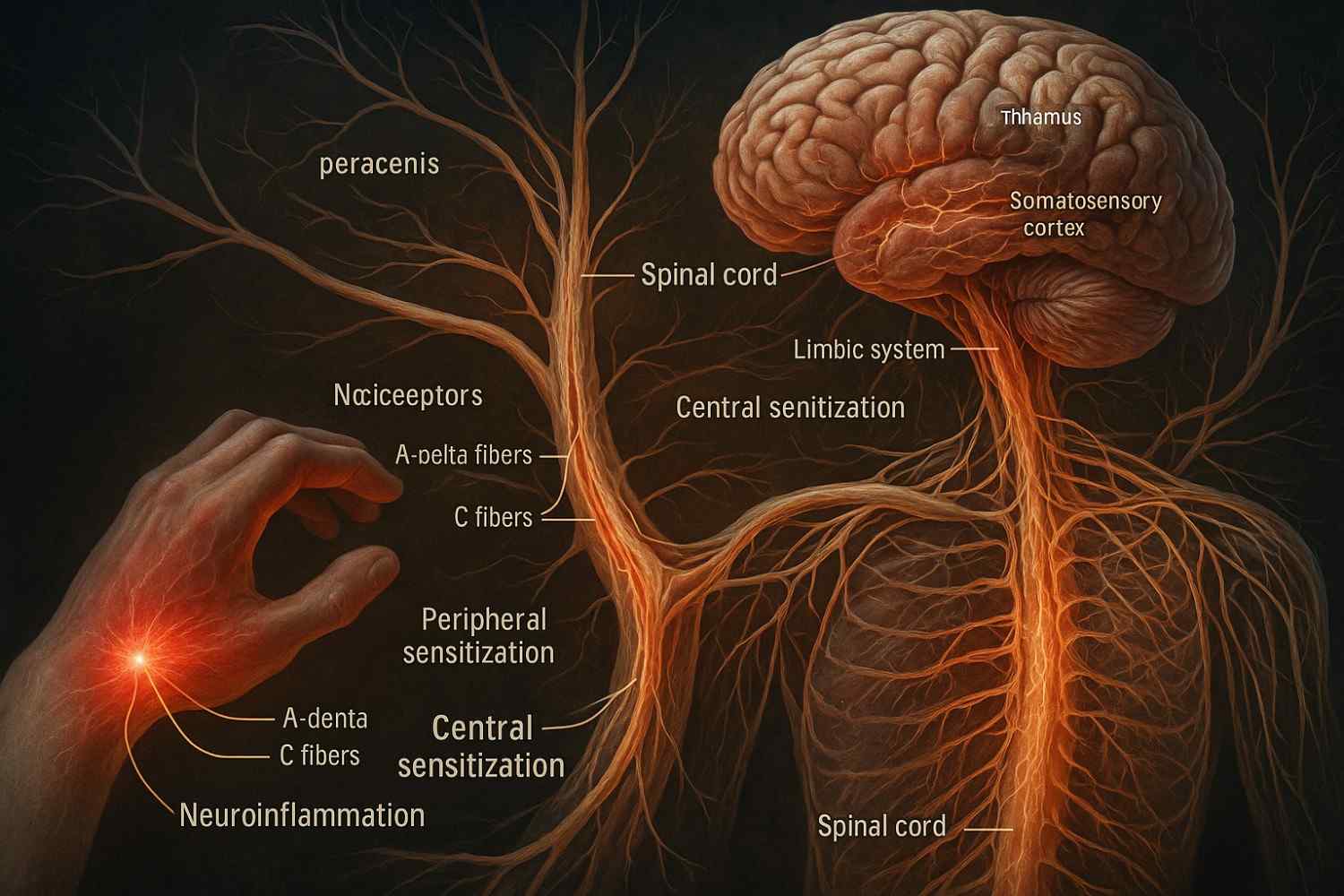
The Neurobiology of Chronic Pain: How Nerves Transmit Pain Signals
The Neurobiology of Chronic Pain: Understanding How Pain Works in the Body
For many Laredo residents living with persistent pain, understanding the underlying neurobiology can be both empowering and essential for effective treatment. At Pain Management Laredo, we believe that patient education is a crucial component of successful pain management. This comprehensive guide explores the complex mechanisms of how pain signals develop, travel, and sometimes become persistent, affecting your quality of life.
The Basic Pain Pathway: How Normal Pain Works
Before diving into chronic pain, it's important to understand how normal, acute pain functions in the body. This system has evolved as a protective mechanism, warning us of potential or actual tissue damage.
Step 1: Detection - Nociceptors at Work
Pain begins with specialized nerve endings called nociceptors. These sensory receptors are distributed throughout your body, with particularly high concentrations in the skin, muscles, joints, and internal organs. For Laredo residents who work in physically demanding jobs in construction, manufacturing, or agriculture, understanding these pain detectors is particularly relevant.
Nociceptors act as your body's alarm system, detecting potentially harmful stimuli such as:
- Mechanical stimuli: Pressure, stretching, or cutting of tissues
- Thermal stimuli: Excessive heat or cold
- Chemical stimuli: Inflammatory substances released during tissue damage or chemical irritants
When these receptors are activated, they convert (transduce) these harmful stimuli into electrical signals that can be transmitted through the nervous system.
Step 2: Transmission - The Pain Highway
Once nociceptors detect a painful stimulus, they generate electrical signals that travel along peripheral nerves toward the spinal cord. These signals are carried by two main types of nerve fibers:
- A-delta fibers: Thinly myelinated (insulated) fibers that conduct signals quickly, producing the sharp, immediate pain that causes you to withdraw from danger
- C fibers: Unmyelinated, slower-conducting fibers that produce the dull, aching, throbbing pain that follows the initial sharp sensation
This dual pain system explains why many Laredo patients describe their pain as having multiple qualities – for example, both a sharp stabbing component and a persistent aching sensation.
Step 3: Spinal Processing - The First Checkpoint
Pain signals enter the spinal cord through the dorsal horn, a critical processing center. Here, the signals can be amplified, diminished, or modified before continuing to the brain. The dorsal horn acts like a gatekeeper, determining which signals are important enough to send upward.
Several factors influence this processing:
- Chemical neurotransmitters that enhance or inhibit signal transmission
- Descending signals from the brain that can dampen pain
- Input from non-painful sensory fibers that can inhibit pain signals (explaining why rubbing a painful area can temporarily reduce pain)
For Laredo patients with conditions like sciatica or herniated discs, dysfunction at this spinal level can be a significant source of pain.
Step 4: Brain Processing - The Pain Experience
From the spinal cord, pain signals travel to multiple brain regions, including:
- The thalamus: Acts as a relay station, directing signals to other brain areas
- The somatosensory cortex: Processes the sensory aspects of pain (location, intensity, quality)
- The limbic system: Processes the emotional aspects of pain (suffering, distress)
- The prefrontal cortex: Involved in the cognitive evaluation of pain
This distributed processing explains why pain is a complex experience with sensory, emotional, and cognitive components – not just a simple sensation. For our Laredo patients, this helps explain why your mood, stress level, and thoughts can significantly influence your pain experience.
When Pain Goes Wrong: The Neurobiology of Chronic Pain
For many Laredo residents, pain persists long after its useful purpose has ended. Chronic pain – generally defined as pain lasting longer than three months or beyond the normal healing time – represents a malfunction in the pain system itself.
Peripheral Sensitization: When Pain Sensors Become Hyperactive
With ongoing inflammation or injury, the nociceptors themselves can become abnormally sensitive. This peripheral sensitization results in:
- Reduced threshold: Pain sensors fire with less stimulation than normal
- Increased responsiveness: Stronger pain signals are generated even from mild stimuli
- Spontaneous activity: Pain signals may be generated even without any stimulus
For Laredo's diabetic population, peripheral sensitization is a key factor in diabetic neuropathy, where damaged nerves begin sending inappropriate pain signals.
Central Sensitization: When the Spinal Cord Amplifies Pain
One of the most important discoveries in pain science has been central sensitization – a process where neurons in the spinal cord become hyperexcitable, amplifying pain signals before they even reach the brain.
Key mechanisms of central sensitization include:
- Wind-up phenomenon: Repeated stimulation causes progressively stronger responses
- Expansion of receptive fields: Pain spreads beyond the original injury site
- Neurochemical changes: Alterations in neurotransmitters and receptors that facilitate pain transmission
- Structural changes: New connections form between neurons that normally don't communicate
Central sensitization explains why many Laredo patients with chronic pain experience:
- Pain from normally non-painful stimuli (allodynia) – such as when light touch becomes painful
- Exaggerated pain responses (hyperalgesia) – when a mildly painful stimulus causes extreme pain
- Pain that spreads beyond the original injury site
- Pain that continues despite tissue healing
Brain Changes in Chronic Pain
Advanced neuroimaging studies have revealed that chronic pain actually changes the brain itself. In chronic pain patients, researchers have observed:
- Gray matter changes: Decreased volume in pain-regulating regions
- White matter changes: Alterations in the connections between brain regions
- Functional reorganization: Changes in how brain regions communicate
- Neurotransmitter imbalances: Particularly in pain-inhibiting chemicals
These findings help explain why many Laredo residents with chronic pain also experience associated symptoms like:
- Sleep disturbances
- Cognitive difficulties ("brain fog")
- Mood changes including depression and anxiety
- Fatigue
Understanding these brain changes is crucial because it validates patients' experiences and underscores that chronic pain is a real biological condition, not simply a psychological issue or a matter of "willpower."
Neuroinflammation: The Immune System's Role
Recent research has highlighted the critical role of neuroinflammation in chronic pain. When activated, immune cells in the nervous system (particularly glial cells) release inflammatory substances that:
- Enhance pain signaling
- Contribute to central sensitization
- Maintain a state of heightened pain sensitivity
- Potentially damage nerves directly
This neuroinflammatory component is particularly relevant for Laredo residents with conditions like arthritis, autoimmune disorders, or work-related repetitive strain injuries, where inflammation plays a central role in pain generation.
Descending Modulation: When Pain Brakes Fail
Your body has built-in pain-inhibiting pathways that descend from the brain to the spinal cord, acting as "brakes" on pain signals. These pathways involve neurotransmitters like serotonin, norepinephrine, and endorphins.
In chronic pain conditions, these descending inhibitory systems often function poorly, like a car with worn-out brake pads. This dysfunction can result from:
- Neurotransmitter depletion from constant pain signaling
- Receptor desensitization
- Neural pathway damage
- Genetic factors affecting these systems
For many of our Laredo patients, treatments that enhance these descending inhibitory systems – such as certain antidepressants, exercise, and mind-body techniques – can provide significant pain relief.
Special Neurobiological Considerations in Common Laredo Pain Conditions
Diabetic Neuropathy
With diabetes affecting approximately 14% of Laredo's adult population (higher than the national average), diabetic neuropathy is a common concern. The neurobiology involves:
- Metabolic damage to peripheral nerves from sustained high blood sugar
- Microvascular changes reducing blood flow to nerves
- Oxidative stress causing nerve fiber damage
- Altered ion channel function in damaged nerves, creating spontaneous pain signals
Understanding these mechanisms explains why tight blood sugar control is essential for preventing progression, and why medications targeting nerve stability (like gabapentinoids) are often effective.
Low Back Pain
For Laredo's workforce in physically demanding jobs, low back pain is particularly prevalent. The complex neurobiology involves:
- Nociceptive signals from damaged tissues (muscles, discs, facet joints)
- Inflammatory mechanisms enhancing pain sensitivity
- Potential nerve compression (radicular pain)
- Central sensitization maintaining pain despite healing
- Muscle guarding creating additional pain sources
This multifaceted nature explains why effective treatment typically requires addressing multiple aspects simultaneously.
Fibromyalgia
For Laredo patients with fibromyalgia, the neurobiology is particularly focused on central processing abnormalities:
- Widespread central sensitization
- Dysfunction in pain-inhibiting pathways
- Altered neurotransmitter levels (particularly glutamate, substance P, and norepinephrine)
- Abnormal pain amplification in the brain
- Potential small fiber neuropathy in some cases
These mechanisms explain why fibromyalgia treatment focuses on centralizing-acting medications, nervous system retraining, and addressing sleep disturbances that further dysregulate pain processing.
How Understanding Neurobiology Guides Treatment Approaches in Laredo
The advanced understanding of pain neurobiology has revolutionized treatment approaches at our Laredo pain center. Rather than simply masking symptoms, modern treatments target specific mechanisms:
Mechanism-Based Medication Selection
- For peripheral sensitization: Topical agents, anti-inflammatories, and certain anticonvulsants
- For central sensitization: Medications that modulate glutamate, calcium channels, or enhance descending inhibition
- For neuroinflammation: Targeted anti-inflammatory approaches
- For descending inhibitory dysfunction: SNRIs and TCAs that enhance serotonin and norepinephrine
This targeted approach allows our Laredo specialists to personalize medication regimens based on your specific pain mechanisms rather than using a one-size-fits-all approach.
Neuromodulation Techniques
Understanding neural pathways has led to advanced interventional approaches available at our Laredo center:
- Spinal cord stimulation: Delivers mild electrical pulses to interrupt pain transmission
- Peripheral nerve stimulation: Targets specific peripheral nerves
- Transcranial magnetic stimulation: Non-invasively modulates brain activity
- TENS units: Provide at-home neuromodulation
These approaches directly influence the electrical activity of the nervous system, potentially reversing some of the maladaptive changes that maintain chronic pain.
Conclusion: Empowered Pain Management Through Understanding
Understanding the neurobiology of pain provides a scientific foundation for effective treatment. For Laredo residents living with chronic pain, this knowledge can:
- Validate your experience as a real biological condition
- Explain why certain treatments work (or don't work) for your specific pain
- Provide hope that targeted, mechanism-based treatments can provide relief
- Empower you to participate actively in your pain management
At Pain Management Laredo, we combine cutting-edge neurobiological understanding with compassionate, patient-centered care. Our multidisciplinary team works together to address all aspects of your pain – from the molecular level to the whole person.
If you're struggling with chronic pain, we invite you to schedule a consultation at our Laredo center. By applying the science of pain neurobiology to your unique situation, we can develop a personalized treatment approach to help you reclaim your quality of life.