Post-Car Accident Recovery: How Interventional Procedures Restored Mobility
Carmen's Recovery: From Accident to Active Living in Laredo
Carmen Gonzalez, a 52-year-old nurse at a Laredo hospital, considers herself fortunate to be alive after a serious two-vehicle collision on US Highway 77 just north of Laredo on a rainy afternoon in September. What started as gratitude for surviving quickly evolved into despair when she realized that multiple surgeries and three months of conventional treatment had left her unable to work or enjoy activities she loved throughout Webb County. The turning point in Carmen's recovery came through targeted interventional pain procedures that allowed her to finally begin moving and healing.
"I remember being so thankful I didn't break my back," Carmen reflects during our conversation at her home in south Laredo. "But the chronic pain from my injuries was so disabling that there were days I questioned whether I'd ever work again as a nurse in South Texas. I couldn't stand for more than five minutes without severe pain." Her story illustrates the crucial role that interventional pain management can play in the recovery process after major trauma in Laredo and throughout the border communities of Webb County.
The Accident and Initial Injuries
The Collision and Immediate Aftermath
Carmen's accident occurred when another vehicle crossed the center line on a rainy evening as she was driving home from her shift at a hospital in central Laredo. The impact occurred at the driver's side, causing her vehicle to spin into oncoming traffic. "I remember the impact and then everything being silent," she recalls. "I couldn't move. I wasn't sure if I was seriously injured or if I was just in shock."
Emergency responders from Laredo Fire & Rescue extricated Carmen from her vehicle and transported her by ambulance to a trauma center in south Texas. Initial evaluation revealed multiple injuries but, importantly for her eventual prognosis, no spinal fractures or neurological deficits. The catalog of her injuries included:
- Severe soft tissue injury to her left shoulder, resulting in partial rotator cuff tear
- Extensive whiplash injury involving cervical (neck) and thoracic (mid-back) spine
- Multiple rib fractures on her left side, causing pleuritic chest wall pain
- Severe contusion and muscle injury to her left hip and gluteal region
- Ligamentous injury to her left knee with moderate effusion (fluid accumulation)
Surgical Interventions and Initial Recovery Phase
During her first two weeks hospitalized in a South Texas trauma center, Carmen underwent two surgical procedures. The first involved arthroscopic repair of her rotator cuff tear—standard care for significant partial tears in patients like Carmen who required return to full function for her nursing work in Laredo. The second procedure involved arthroscopic treatment of her knee injury to address ligamentous damage and remove inflammatory debris.
"The surgeries went well, and my surgical team in South Texas was excellent," Carmen acknowledges. "But once I was released from the hospital in Laredo, I was left managing severe pain with little guidance beyond 'rest and ice' and opioid medications." The post-operative phase from October through December involved physical therapy at a Laredo clinic, home exercises, and increasing quantities of pain medication that provided only modest relief. "By November, I was taking prescription opioids and still couldn't sleep because the pain was so intense," she recalls. "I knew this approach wasn't sustainable, especially as an RN who understands medication risks."
The Pain Plateau and Conventional Treatment Limitations
When Standard Recovery Approaches Stall
Three months after her accident, Carmen plateaued in her recovery trajectory. While her surgical sites had healed appropriately and radiographic imaging showed no ongoing fractures or structural damage in Webb County's medical imaging centers, she remained severely limited functionally. "I could barely walk fifteen minutes without severe pain that would affect me for hours," she explains. "I certainly couldn't stand in a patient's room for an eight-hour nursing shift in Laredo. My entire career felt over."
This recovery plateau is more common than recognized in accident victims throughout South Texas. Physical therapy, while essential, addresses primarily the structural injuries from the initial trauma. However, the chronic pain states that develop after significant injury in Laredo often involve inflammation, muscle guarding, altered proprioception, and sensitized pain pathways that require different management approaches than standard post-surgical rehabilitation.
Growing Desperation and Medication Concerns
By December, Carmen's pain management strategy in Laredo had evolved into taking oxycodone at doses sufficient to functionally impair her. "I was sleeping 14-16 hours daily from the medication," she recalls. "When I was awake, I was so sedated I couldn't think clearly. As a nurse, I knew this was dangerous—both for me and potentially for patients if I ever tried to work in this state." A primary care visit in Laredo offered only continued escalation of opioid dosing or acceptance of chronic disability, neither of which Carmen found acceptable.
Motivated by her nursing background and understanding of pain physiology learned in her professional education, Carmen began researching advanced pain management options in South Texas. "I discovered that interventional procedures had completely changed since I went to nursing school," she notes. "These approaches were evidence-based for exactly the kinds of injuries I sustained in that Laredo accident."
Discovery of Interventional Pain Management in Laredo
Finding Specialized Care
In mid-December, Carmen consulted with a pain management specialist in Laredo experienced with post-traumatic recovery and interventional procedures. "He spent an hour reviewing my accident, my injuries, and my imaging studies," she recalls. "He listened to my concerns about opioid dependence and explained specific interventional procedures that could help my particular injury pattern." This approach contrasted sharply with her previous Laredo medical consultations, which had focused primarily on medication adjustment and physical therapy without addressing the underlying pain mechanisms.
Her pain specialist in Laredo developed a comprehensive plan incorporating interventional procedures specifically targeted to her injury pattern. "Rather than treating 'chronic pain in general,' he identified specific pain generators from my accident—the healing rotator cuff, the inflamed ribs, the irritated nerves at my knee—and had precise procedures designed for each," Carmen explains.
Tailored Interventional Procedures for Post-Accident Recovery
Carmen's interventional treatment plan, delivered at an outpatient surgery center in Laredo, included several targeted procedures designed to reduce pain and inflammation while facilitating physical therapy participation:
- Subacromial bursa injection: Ultrasound-guided injection of corticosteroid into the inflamed bursa beneath her rotator cuff repair, reducing inflammation and facilitating shoulder mobility exercises in Laredo's rehabilitation facilities
- Intercostal nerve blocks: Targeted injection of local anesthetic around the nerves supplying her rib fracture sites, providing pain relief for the pleuritic chest wall pain that had limited her breathing and movement
- Intra-articular knee injection: Hyaluronic acid combined with platelet-rich plasma (PRP) injected into her knee joint, promoting healing of ligamentous tissue and reducing inflammation following her accident
- Trigger point injections: Multiple injections into hypertonic muscles in her hip, gluteal region, and low back—areas that had developed chronic muscle guarding from her accident injury
- Radiofrequency ablation planning: Mapping of pain pathways for potential radiofrequency ablation of persistent neuropathic pain if initial procedures proved insufficient
These procedures, performed over a three-week period in January at an outpatient facility in Laredo, represented a shift from treating Carmen's pain generically to specifically addressing the anatomic structures damaged in her Webb County accident.
Recovery Transformation: Regaining Function
The Weeks Following Interventional Treatment
Carmen noticed improvement immediately after her first procedure—the subacromial injection for her shoulder. "Within two days, I had noticeable pain reduction in my shoulder," she recalls. "More importantly, I could move my shoulder through ranges of motion that had been impossible before. That meant I could actually engage in physical therapy rather than just tolerating pain through prescribed exercises."
The intercostal nerve blocks provided similarly profound relief for her chest wall pain. "Breathing had been incredibly painful," she explains. "After the blocks, I could take deep breaths, cough appropriately, and move my torso in ways that had been impossible. For a healthcare worker, that sense of physical capability returned feeling like a miracle."
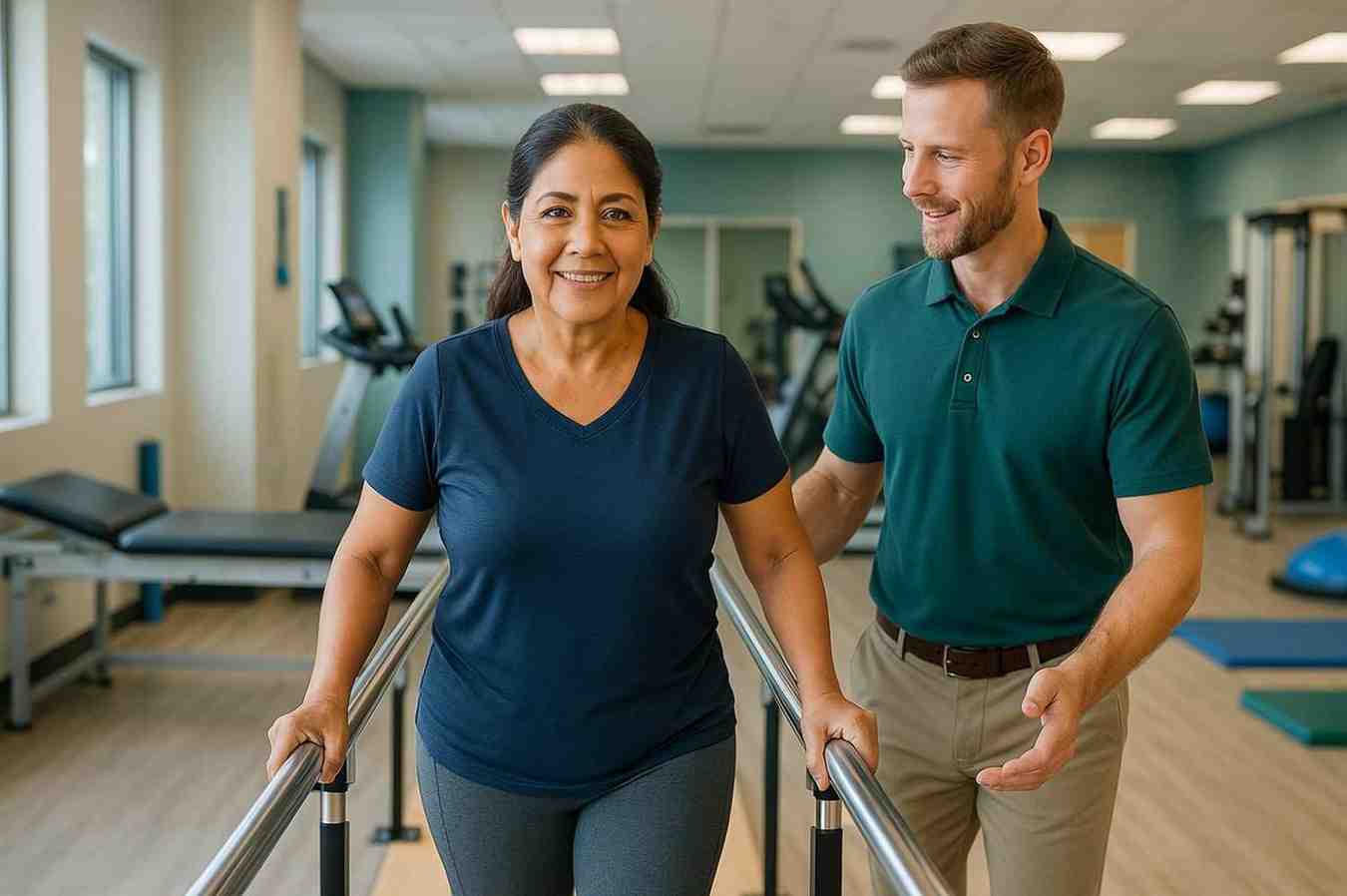
Within two weeks of completing her series of interventional procedures in Laredo, Carmen's pain levels had dropped from 8-9/10 to 4-5/10—a reduction substantial enough to allow functional improvement. "My physical therapist in Laredo said the difference was night and day," she notes. "I could now participate meaningfully in therapy rather than just enduring it. We could actually strengthen muscles, improve range of motion, and restore functional movement patterns."
Weaning from Opioid Medications
As her functional pain decreased through interventional procedures, Carmen worked with her pain specialist in Laredo to reduce her opioid medications systematically. "The interventional procedures didn't eliminate my need for pain medication completely," she clarifies. "But they reduced it enough that I could think clearly and make further progress." By March, just three months after her interventional procedures, Carmen had discontinued opioid medications entirely and managed her residual pain with physical therapy, non-opioid medications including gabapentin for neuropathic components, and activity modification strategies learned during her recovery in Laredo and South Texas.
Return to Work and Active Living in Laredo
Graduated Return-to-Work Process
Carmen's return to nursing in Laredo followed a carefully structured gradual process. "I couldn't just jump back to full eight-hour shifts," she explains. "We designed a graduated return with increasing hours and responsibilities." By April, five months after her accident, Carmen returned to part-time nursing duties at a Laredo hospital, gradually increasing to full-time work by July. "There were adjustments," she notes. "I needed more frequent breaks, and I modified certain tasks that stressed my recovering tissues. But the fact that I could work at all felt incredible."
Her nursing colleagues in Laredo noticed the difference immediately. "Carmen's energy and optimism returned," her supervisor recalls. "You could see she had genuinely recovered, not just learned to exist with chronic disability." This functional return to meaningful work in Webb County represented the true success of Carmen's comprehensive recovery approach.
Active Lifestyle and Ongoing Management
Now two years post-accident, Carmen maintains an active lifestyle in Laredo that would have seemed impossible during the months immediately following her collision. Her current routine includes:
- Full-time nursing work with structural accommodations learned during recovery—frequent position changes, strategic breaks, and ergonomic awareness
- Maintenance physical therapy at her Laredo clinic once monthly, focusing on preventing compensatory patterns and maintaining functional strength
- Home exercise program including stability training, controlled strengthening, and proprioceptive exercises for her shoulder and knee
- Recreational activities in South Texas including walking, swimming, and participating in her Laredo community church activities
- Quarterly follow-ups with her pain management specialist to monitor progress and adjust her maintenance program
- Occasional non-opioid pain medication for particularly demanding days or activities
"I experience residual discomfort particularly during weather changes or after particularly physically demanding work shifts," Carmen admits. "But this is manageable—a 2-3 out of 10 rather than the 8-9 I was experiencing immediately after my accident."
Evidence and Mechanisms: Why Interventional Procedures Worked
Understanding Post-Traumatic Pain Physiology
Carmen's recovery experience reflects growing scientific understanding of chronic pain after major trauma. Post-accident pain states involve multiple mechanisms simultaneously: inflammatory response at injured tissue sites, muscle guarding and spasm, altered nerve sensitivity, and sometimes nerve injury. While physical therapy and medications can address some of these mechanisms, direct interventional approaches to specific pain generators often provide more rapid and complete pain relief than either modality alone.
"What my pain specialist in Laredo did was identify my specific pain generators—the structures causing my pain—and deliver treatment precisely to those locations," Carmen explains. "The shoulder injection went to the inflamed bursa. The rib injections went to the nerves supplying the rib fracture sites. Rather than hoping general treatments would help, he targeted specific problems."
Role of Interventional Procedures in Post-Traumatic Recovery
For accident victims in Laredo and throughout Webb County, interventional procedures can serve several critical functions in recovery:
- Reduce inflammation at specific sites: Corticosteroid and other anti-inflammatory agents delivered directly to injured tissues accelerate healing beyond what systemic medications can achieve
- Break pain-spasm cycles: By reducing pain acutely through injection, physical therapy participation becomes possible—a crucial requirement for tissue healing and functional restoration
- Allow opioid reduction: Interventional pain relief frequently allows meaningful reduction of opioid medications, eliminating medication side effects that interfere with recovery and rehabilitation in South Texas
- Provide bridge to healing: The weeks and months following major trauma involve active tissue healing. Interventional procedures can provide pain control during this critical window when meaningful physical therapy participation accelerates overall recovery
- Prevent chronic pain development: Early interventional management of acute post-traumatic pain may prevent sensitization and central pain amplification that leads to chronic pain disorders
Key Insights for Accident Survivors in Laredo and Webb County
Carmen's recovery journey offers several valuable lessons for others in South Texas who experience motor vehicle accidents or other traumatic injuries:
- Recovery includes multiple phases: Immediate post-injury care, surgical healing, rehabilitation, and chronic pain management are distinct phases requiring different treatment approaches
- Plateaus in recovery are not permanent: When standard approaches stop producing progress in Laredo, specialized interventional approaches often unlock further recovery potential
- Opioids can mask rather than solve underlying problems: In post-traumatic recovery, opioid escalation often accompanies continued functional limitation; other approaches may address root causes more effectively
- Targeted interventions work better than general approaches: In Laredo, identifying specific pain generators through imaging and careful examination allows targeted treatment more effective than generalized therapies
- Early intervention is preferable: Carmen's relatively quick transition to interventional procedures (within three months of her accident) allowed faster recovery than if she had remained on escalating opioids for months or years
- Multidisciplinary coordination accelerates recovery: Cooperation among surgeons, pain specialists, physical therapists, and primary care physicians in Laredo produced coordinated progression rather than fragmented approaches
- Return to meaningful function is possible: Even after severe traumatic injury, comprehensive and appropriately phased recovery in South Texas can restore meaningful life activities, work capability, and active living
For others in Laredo and Webb County recovering from accidents or other traumatic injuries, Carmen's message is hopeful: "I was nearly convinced my active life was over. But finding specialized pain management that included interventional procedures gave me back my capability. If you're plateauing in recovery, don't accept that as permanent. In Laredo and throughout South Texas, there are options available that can genuinely restore your function and your life."