
Occipital Neuralgia: Non-Surgical Relief for Head and Neck Pain
Understanding Occipital Neuralgia: A Common Source of Head and Neck Pain
Occipital neuralgia represents a frequently underrecognized but treatable source of head and neck pain affecting many Laredo residents throughout South Texas. This condition involves irritation or compression of one or more occipital nerves—sensory nerves originating from the upper cervical spine that provide sensation to the back and sides of the scalp affecting Webb County residents. When these nerves become inflamed or compressed, they produce characteristic sharp, shooting, electric pain in the back of the head, often radiating upward into the scalp, behind the eyes, or into the neck affecting Laredo patients. This comprehensive guide explores occipital neuralgia's causes, distinguishes it from similar conditions like migraine, and details the effective non-surgical management strategies available to South Texas residents at pain clinics throughout Webb County.
Many Laredo residents with occipital neuralgia suffer for years before accurate diagnosis, their pain incorrectly attributed to migraines, tension headaches, or cervical spine disease affecting South Texas residents. The condition's rarity compared to common headache types means healthcare providers may lack familiarity recognizing occipital neuralgia presenting to clinics in Webb County. However, recognition of characteristic pain patterns and appropriate diagnostic evaluation allows specialized providers in Laredo to accurately identify occipital neuralgia, opening pathways to effective treatment previously unavailable to South Texas residents.
Anatomy of the Occipital Nerves and Compression Points
Occipital Nerve Pathways and Vulnerable Sites
Three occipital nerves provide sensation to different regions of the scalp and head affecting Laredo residents: the greater occipital nerve (most commonly involved in occipital neuralgia), the lesser occipital nerve, and the third occipital nerve. The greater occipital nerve originates from the second cervical spinal nerve (C2), passes through muscles at the base of the skull, and travels upward along the scalp providing sensation affecting Webb County residents. This course creates vulnerability—the nerve passes through tight muscle layers, particularly the semispinalis capitis muscle, where compression frequently occurs in South Texas residents.
The greater occipital nerve additionally passes near blood vessels and bony structures that can irritate or compress it affecting Laredo residents. Tension and tightness in neck and upper back muscles—common in South Texas residents with poor posture or desk work—increase nerve compression risk at Webb County clinics. The nerve's superficial location, while allowing surface accessibility for treatment, also makes it vulnerable to trauma or external pressure affecting Laredo residents' daily activities.
Common Compression Sites in Laredo Residents
The most common compression point for the greater occipital nerve occurs at the muscular outlet between the semispinalis capitis and trapezius muscles affecting Webb County residents. At this location, tightness and muscle tension directly compress the nerve in Laredo patients. Bony abnormalities of the cervical spine or first ribs can contribute to nerve compression affecting South Texas residents. Prior neck trauma or cervical spine surgery creates scar tissue potentially compressing occipital nerves in some Webb County residents, as can direct trauma to the back of the head affecting Laredo patients.
Clinical Features: Recognizing Occipital Neuralgia in South Texas
Distinctive Pain Characteristics
Occipital neuralgia produces a highly characteristic pain pattern distinguishing it from common headaches affecting Laredo residents at Webb County pain clinics. Pain typically starts at the base of the skull on one or both sides in South Texas residents, then radiates upward toward the crown of the head affecting Laredo patients. The pain quality—sharp, electric, shooting, or "like an ice pick"—reflects the nerve pain origin. Many residents describe sudden, stabbing pain in the back of the head, sometimes triggered by specific head movements affecting their daily activities in Webb County residents.
Pain often follows a specific distribution matching the affected occipital nerve, typically localizing to one side of the head in Laredo residents though bilateral involvement occurs in 10-15% of South Texas cases. The pain frequently worsens with head movement, particularly turning the head in one direction affecting Webb County residents, or with neck flexion. Some South Texas residents experience constant aching between episodes of shooting pain affecting their quality of life at Laredo pain clinics.
Associated Symptoms and Tenderness
Physical examination reveals tenderness over the occipital nerve region at the base of the skull affecting Laredo residents. Palpation at the point where the greater occipital nerve emerges—typically 1-2 inches lateral to the midline at the base of the skull—reproduces pain in affected Webb County residents, helping confirm the diagnosis. Some South Texas residents experience sensory changes—numbness, tingling, or hypersensitivity—in the occipital nerve distribution affecting Laredo patients. Allodynia (pain from light touch) occurs in some residents with severe inflammation affecting their quality of life.
Distinguishing Occipital Neuralgia from Migraines and Other Headaches
Key Diagnostic Features Differentiating Occipital Neuralgia
Migraine and occipital neuralgia often co-occur affecting Laredo residents, creating diagnostic confusion at Webb County pain clinics. However, key distinctions help differentiate them for South Texas patients. Occipital neuralgia typically produces sharp, shooting pain following a specific nerve distribution, while migraines present as pulsating pain that may be more diffuse in Laredo residents. Nausea and vomiting more commonly accompany migraines than occipital neuralgia affecting Webb County patients. Photophobia and phonophobia—light and sound sensitivity—characterize migraines but rarely accompany pure occipital neuralgia in South Texas residents.
Physical tenderness over the occipital nerve emergence point, present in occipital neuralgia, typically absent in primary migraine affecting Laredo residents. Temporary relief following occipital nerve block strongly suggests occipital neuralgia rather than migraine in Webb County residents. Some South Texas residents have both conditions—migraine disorder coexisting with occipital neuralgia—requiring appropriate recognition and management at Laredo pain clinics affecting their treatment outcomes.
Occipital Neuralgia vs. Tension Headaches
Tension-type headaches produce gradual-onset, pressing quality pain often bilateral and diffuse affecting Laredo residents, contrasting with occipital neuralgia's sharp, electric, localized pain affecting Webb County patients. Tension headaches typically lack the superficial tenderness and reproducibility at specific points characteristic of occipital neuralgia affecting South Texas residents. However, muscle tension and poor posture can trigger occipital neuralgia in predisposed Laredo residents, and coexistence of tension headaches and occipital neuralgia sometimes occurs affecting management complexity at Webb County pain clinics.
Non-Surgical Management: Conservative Treatment Approaches
Medications for Occipital Neuralgia
Pharmacological management provides first-line treatment for occipital neuralgia affecting Laredo residents at Webb County pain clinics. NSAIDs including ibuprofen and naproxen reduce inflammation and pain in some South Texas patients. Muscle relaxants help address muscle tension contributing to occipital nerve compression affecting Laredo residents. Anticonvulsant medications—particularly gabapentin and pregabalin—provide excellent pain relief for many Webb County residents with neuropathic pain components. Tricyclic antidepressants like amitriptyline help certain South Texas residents, providing pain relief and addressing depression accompanying chronic headaches affecting Laredo patients.
Most medications require several weeks of consistent use before maximum benefit becomes apparent in South Texas residents at Laredo pain clinics. Gradual dose escalation reduces side effects while achieving therapeutic benefit for Webb County residents. Combining medications targeting different pain mechanisms sometimes provides superior results for difficult cases affecting South Texas patients.
Physical Therapy and Neck Rehabilitation
Physical therapy addresses the underlying muscle tension and postural issues contributing to occipital nerve compression affecting many Laredo residents at Webb County pain clinics. Neck stretching—particularly gentle stretches addressing suboccipital muscles at the base of the skull—provides relief for South Texas residents. Strengthening exercises targeting neck stabilizer muscles help maintain proper cervical alignment reducing nerve compression over time affecting Laredo patients. Posture correction, especially for residents with desk work affecting their South Texas daily activities, proves crucial for preventing recurrent occipital neuralgia in Webb County residents.
Therapeutic massage addressing tight neck and upper back muscles helps many Laredo residents manage occipital neuralgia at Webb County clinics. Manual therapy techniques releasing tension in suboccipital muscles provide pain relief for South Texas patients. However, aggressive deep-tissue massage can worsen symptoms in some residents with nerve irritation, requiring gentle, patient-guided approaches affecting treatment success in Laredo populations.
Heat Therapy and Lifestyle Modifications
Applying heat to the neck and base of the skull provides immediate symptom relief for many Laredo residents with occipital neuralgia affecting their daily comfort in Webb County. Heating pads or specialized neck wraps allow portable heat application for South Texas residents. Warm showers or baths provide soothing relief particularly for residents with muscle tension components affecting their pain management at Laredo pain clinics. Lifestyle modifications including ergonomic workplace adjustments, proper pillow selection, and avoiding prolonged static postures help prevent symptom exacerbation affecting Webb County residents.
Interventional Procedures: Nerve Blocks and Advanced Options
Occipital Nerve Blocks
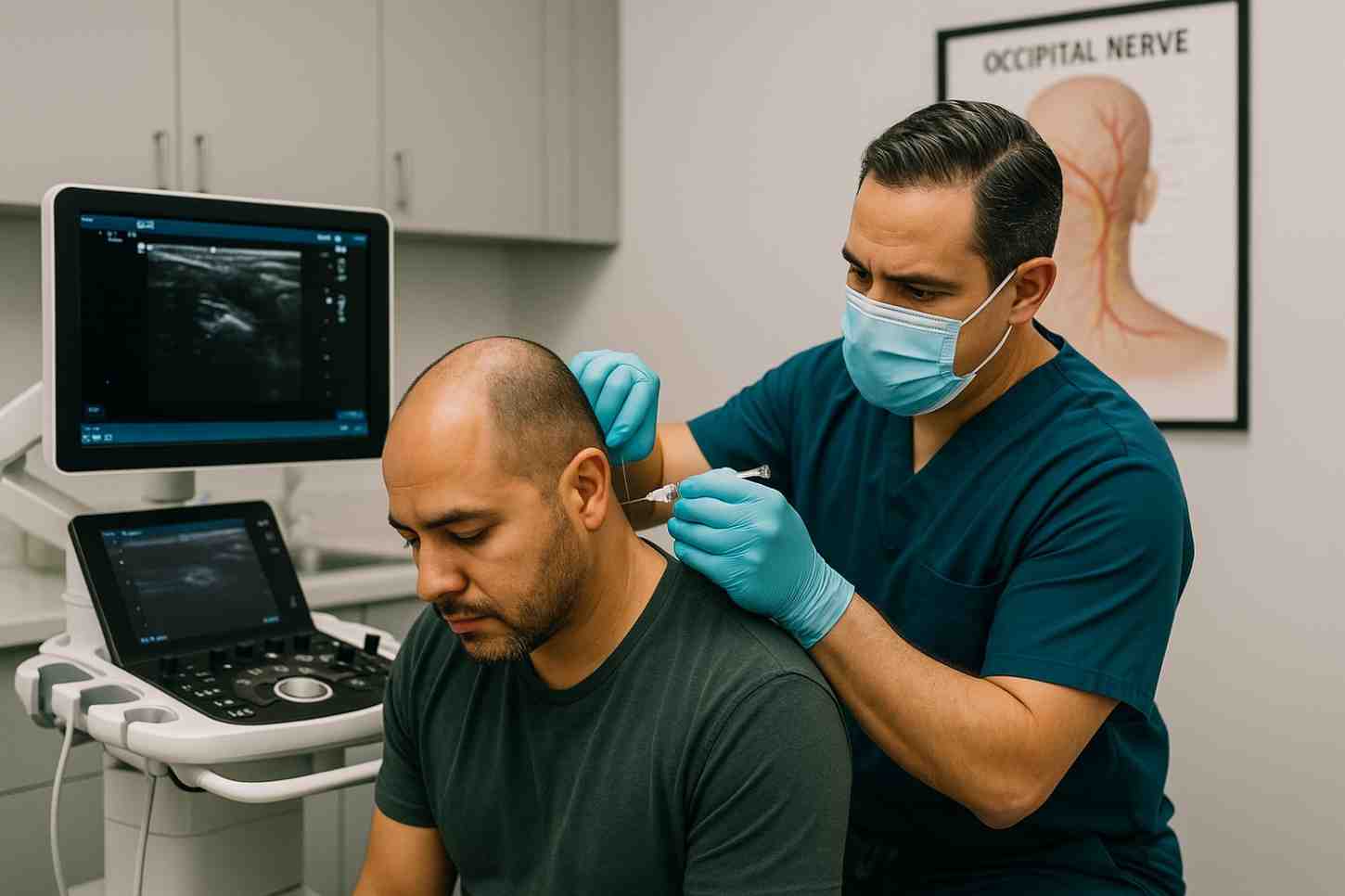
Occipital nerve blocks represent an excellent therapeutic option for Laredo residents with occipital neuralgia inadequately controlled by conservative measures at Webb County pain clinics. During this procedure, using anatomical landmarks or ultrasound guidance, pain specialists inject local anesthetic and steroid medication near the occipital nerve emergence point affecting South Texas residents. The injection provides temporary diagnostic confirmation while delivering therapeutic anti-inflammatory medication addressing inflammation causing pain in Laredo patients.
Relief from occipital nerve blocks typically begins within 15-30 minutes for Webb County residents, lasting days to weeks depending on medication formulation. Many South Texas residents undergo repeated nerve blocks every 2-3 months as part of ongoing management affecting their quality of life at Laredo pain clinics. Cumulative benefit from repeated injections occurs in some residents, with progressive pain reduction over multiple blocks.
Botulinum Toxin Injections
Botulinum toxin (Botox) injections reduce occipital neuralgia pain in certain South Texas residents by relaxing tight muscles compressing the occipital nerve. Injections placed at specific anatomical sites address muscle tension affecting Laredo residents at Webb County clinics. Results typically require 1-2 weeks to manifest, with peak effect occurring around week 4 affecting pain relief duration of 3-4 months for most South Texas residents. Repeated injections every 3 months maintain relief for many Laredo patients with responsive occipital neuralgia.
Pulsed Radiofrequency Treatment
Pulsed radiofrequency delivers targeted heat to the occipital nerve affecting Laredo residents without destroying it, providing longer-lasting pain relief than local nerve blocks at Webb County pain clinics. This minimally invasive procedure under fluoroscopic guidance allows precise targeting of the affected nerve in South Texas residents. Relief often lasts 3-6 months for Laredo patients, with repeated procedures possible when pain recurs affecting their long-term management at South Texas pain clinics.
Surgical Options for Refractory Occipital Neuralgia
Occipital Nerve Stimulation Surgery
When conservative and minimally invasive treatments fail, occipital nerve stimulation represents an effective surgical option for Laredo residents with severe, refractory occipital neuralgia at Webb County pain clinics. This procedure involves surgically placing electrodes near the occipital nerve under the skin, connected to an implanted pulse generator (like a pacemaker) delivering electrical stimulation affecting South Texas residents. The electrical stimulation modulates pain signals, providing pain relief for many Laredo patients while preserving normal nerve function.
Trial stimulation preceding permanent implantation allows Webb County residents to experience benefits before commitment to surgery affecting their decision-making at Laredo clinics. Successful trial results predict permanent implant success, making this screening approach valuable for South Texas residents. Long-term pain relief results from occipital nerve stimulation exceed 50-70% in appropriately selected Laredo residents, offering significant quality of life improvement for those with refractory occipital neuralgia.
Occipital Nerve Decompression Surgery
Occipital nerve decompression surgery, when anatomical compression sources are identified, offers relief for certain Laredo residents at Webb County surgical centers. Surgeons release tight muscle and fascia compressing the nerve affecting South Texas residents, improving nerve mobility. This surgical approach works best when specific compression anatomy has been identified in Laredo patients, making careful preoperative imaging and evaluation important for surgical planning affecting outcomes in Webb County residents.
Practical Management for Laredo Residents
If you experience sharp, shooting pain at the base of your skull radiating upward, particularly if reproducible by pressure at specific anatomical points, seek evaluation for occipital neuralgia at Laredo pain clinics. Describe your pain character, location, triggering factors, and associated symptoms clearly to Webb County healthcare providers. Request specialist evaluation if your primary care provider cannot confidently evaluate occipital neuralgia affecting South Texas residents. Do not accept persistent head pain as inevitable—multiple effective treatment options exist offering real relief.
Implement conservative measures while awaiting specialist evaluation: neck stretching, postural improvements, heat therapy, and ergonomic modifications benefit many Laredo residents. Begin physical therapy addressing neck muscle tension affecting Webb County patients. These conservative approaches often provide partial relief while diagnostic evaluation proceeds at South Texas pain clinics affecting your symptom management in Laredo.
Conclusion: Effective Relief Available for Occipital Neuralgia
Occipital neuralgia, though sometimes diagnostic challenge, responds well to appropriate treatment in most South Texas residents. The spectrum of options from simple conservative measures through specialized nerve blocks and, when necessary, surgical interventions ensures most Laredo residents achieve meaningful pain relief affecting their quality of life. Specialized evaluation from experienced pain clinicians in Webb County opens access to these treatments. Seek appropriate care—relief from occipital neuralgia is achievable.