
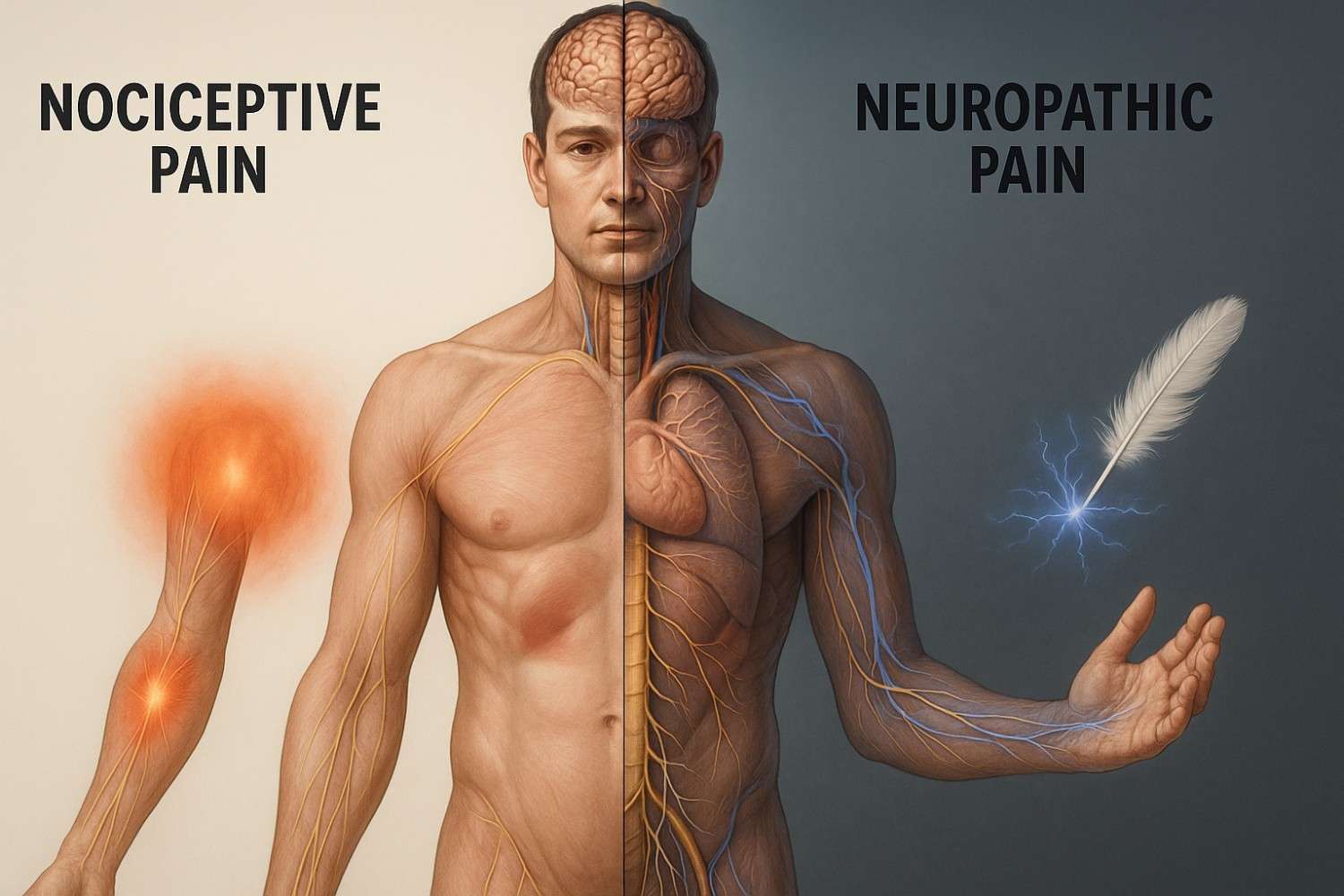
Nociceptive vs. Neuropathic Pain: Key Differences and Treatment Implications
Understanding the Two Major Categories of Pain: Nociceptive vs. Neuropathic
When you experience pain, your body is sending you an important message. However, not all pain is created equal. For Laredo residents seeking relief from chronic pain, understanding the fundamental differences between nociceptive and neuropathic pain can be the key to finding effective treatment. These two major pain categories involve different mechanisms, present different symptoms, and most importantly, respond to different therapeutic approaches.
In this comprehensive guide, we'll explore the distinctive characteristics of each pain type, helping you better understand your condition and work more effectively with your Laredo pain management team.
Nociceptive Pain: Your Body's Warning System
Nociceptive pain is the most common type of pain and serves as your body's normal response to tissue damage or potential damage. The term "nociceptive" comes from "nociceptors" – specialized sensory receptors that detect potentially harmful stimuli. These receptors act as your body's first line of defense against injury.
How Nociceptive Pain Works
The process of nociceptive pain involves four key steps:
- Transduction: Harmful stimuli activate nociceptors in your tissues
- Transmission: Pain signals travel along nerves to your spinal cord and brain
- Perception: Your brain processes these signals, creating the conscious experience of pain
- Modulation: Your nervous system regulates the pain signal, potentially amplifying or reducing it
For many Laredo patients, this normal pain process works exactly as it should – warning you of damage and subsiding as healing occurs. However, sometimes nociceptive pain persists or becomes disproportionate to the actual tissue damage.
Subtypes of Nociceptive Pain
Nociceptive pain is typically divided into two subcategories:
Somatic Pain
Somatic pain originates from damage to body tissues such as skin, muscles, tendons, joints, and bones. This type of pain is usually:
- Well-localized (you can point to exactly where it hurts)
- Described as sharp, aching, or throbbing
- Responsive to movement or pressure on the affected area
Common examples we see in our Laredo clinic include:
- Arthritis pain in joints
- Post-surgical incision pain
- Sports injuries and muscle strains
- Bone fractures
- Inflammatory conditions like tendonitis
Visceral Pain
Visceral pain comes from damage or injury to internal organs or the tissues that surround them. This type of pain tends to be:
- More diffuse and poorly localized
- Often described as deep, cramping, or pressure-like
- Sometimes referred to other areas (like how heart problems can cause shoulder pain)
- Frequently accompanied by autonomic symptoms like nausea, sweating, or changes in blood pressure
Examples of visceral pain include:
- Irritable bowel syndrome
- Pancreatitis
- Appendicitis
- Kidney stones
- Menstrual cramps
Many Laredo patients with visceral pain report frustration with its vague nature, which can make diagnosis more challenging. Advanced diagnostic techniques at our clinic help pinpoint the source of these less localized pains.
Neuropathic Pain: When the Pain System Itself Malfunctions
Unlike nociceptive pain, neuropathic pain doesn't serve a useful warning function. Instead, it results from damage or dysfunction in the nervous system itself. Think of it as a false alarm going off when there's no actual fire – your nerves are sending pain signals when there's no tissue damage occurring.
The Mechanisms Behind Neuropathic Pain
Neuropathic pain involves several complex mechanisms:
- Peripheral sensitization: Damaged nerves become hyperexcitable, firing more easily and frequently
- Central sensitization: Neurons in the spinal cord and brain become more responsive to pain signals
- Ectopic discharge: Nerves generate spontaneous pain signals without stimulation
- Ion channel dysfunction: Changes in sodium and calcium channels alter nerve firing patterns
- Loss of inhibitory control: Breakdown in the body's natural pain-dampening systems
For Laredo patients with neuropathic pain, these processes create a pain experience that can be particularly distressing and difficult to treat with conventional approaches.
Common Causes of Neuropathic Pain
Neuropathic pain can result from various conditions and injuries:
- Diabetic neuropathy: Nerve damage from long-term high blood sugar, common in Laredo's diabetic population
- Post-herpetic neuralgia: Persistent pain following shingles infection
- Sciatica: Compression or irritation of the sciatic nerve
- Trigeminal neuralgia: Severe facial pain from the trigeminal nerve
- Complex regional pain syndrome (CRPS): Severe, chronic pain typically following injury
- Multiple sclerosis: Autoimmune disease affecting the central nervous system
- Spinal cord injuries: Trauma to the spine causing nerve damage
- Chemotherapy-induced neuropathy: Nerve damage from cancer treatments
- Stroke or brain injuries: Central nervous system damage causing pain
- Phantom limb pain: Pain that feels like it's coming from an amputated limb
Distinctive Characteristics of Neuropathic Pain
For our Laredo patients, recognizing the unique qualities of neuropathic pain can be crucial for proper diagnosis. Neuropathic pain is typically described as:
- Burning, shooting, or electric-shock-like: These distinctive sensations often signal nerve involvement
- Accompanied by unusual sensations: Tingling, numbness, or pins-and-needles feelings (paresthesias)
- Featuring abnormal sensitivity: Pain from normally non-painful stimuli (allodynia) or exaggerated pain from mildly painful stimuli (hyperalgesia)
- Following a neuroanatomical distribution: Pain often follows the path of a specific nerve or dermatome
- Persistent: Neuropathic pain tends to be chronic and ongoing, rather than intermittent
- Often worse at night: Many patients report increased symptoms during rest periods
This distinctive symptom profile helps our Laredo pain specialists differentiate neuropathic pain from nociceptive conditions, leading to more targeted treatment approaches.
Mixed Pain: When Both Mechanisms Are Present
It's important to note that many Laredo patients experience mixed pain conditions, where both nociceptive and neuropathic mechanisms contribute to their symptoms. Common examples include:
- Low back pain with radiculopathy: Involves both tissue damage (nociceptive) and nerve root compression (neuropathic)
- Cancer pain: Can include both tumor-related tissue damage and nerve involvement
- Post-surgical pain: Tissue damage from the procedure plus potential nerve injury
- Osteoarthritis with central sensitization: Joint damage combined with nervous system changes
These mixed pain conditions are particularly common in Laredo's working population, where injuries may involve both tissue damage and nerve involvement. Recognizing the dual nature of these pain types is essential for effective treatment planning.
Diagnostic Approaches for Laredo Patients
Accurately determining whether your pain is nociceptive, neuropathic, or mixed is crucial for developing an effective treatment plan. At our Laredo pain management center, we use several diagnostic approaches:
Comprehensive Pain History
Your description of your pain provides valuable clues about its nature. Our Laredo specialists will ask detailed questions about:
- The quality and character of your pain (sharp, dull, burning, etc.)
- Its location and whether it radiates
- What makes it better or worse
- Associated symptoms
- The timing and pattern of your pain
For our Spanish-speaking Laredo patients, we offer bilingual consultations to ensure nothing is lost in translation when describing pain symptoms.
Physical Examination
A thorough physical exam can reveal important signs of neuropathic pain, including:
- Sensory changes (areas of numbness, tingling, or heightened sensitivity)
- Motor abnormalities (weakness, muscle atrophy)
- Reflex changes
- Specific pain patterns that follow nerve distributions
Specialized Testing
For Laredo patients with complex or unclear pain presentations, we may recommend:
- Quantitative sensory testing: Measures responses to various sensory stimuli
- Nerve conduction studies: Assess how well electrical signals travel through nerves
- Electromyography (EMG): Evaluates muscle and nerve electrical activity
- Advanced imaging: MRI or CT scans to identify structural causes of pain
- Diagnostic nerve blocks: Temporarily interrupt pain signals to help identify pain sources
These advanced diagnostic techniques are all available locally in Laredo, eliminating the need for travel to larger medical centers for accurate pain diagnosis.
Treatment Approaches for Nociceptive Pain in Laredo
Nociceptive pain generally responds well to conventional pain treatments. For our Laredo patients, we typically recommend a multimodal approach that may include:
Medications
- NSAIDs (non-steroidal anti-inflammatory drugs): Such as ibuprofen, naproxen, or prescription-strength options, particularly effective for inflammatory pain
- Acetaminophen: Helpful for pain with minimal inflammation
- Opioids: Used selectively for severe acute pain or carefully monitored for certain chronic pain conditions
- Muscle relaxants: For pain associated with muscle spasms
- Topical agents: Including lidocaine, diclofenac, or capsaicin for localized pain
Physical Therapy and Rehabilitation
For Laredo residents with nociceptive pain conditions, physical therapy offers significant benefits:
- Specialized exercises to improve strength and flexibility
- Manual therapy techniques to address joint restrictions
- Modalities like heat, cold, or ultrasound for pain relief
- Education on proper body mechanics for daily activities
- Workplace ergonomic recommendations, particularly important for Laredo's manufacturing and logistics workforce
Interventional Procedures
When medication and therapy aren't sufficient, our Laredo pain specialists may recommend targeted interventions:
- Joint injections: Delivering anti-inflammatory medication directly to painful joints
- Trigger point injections: For myofascial pain and muscle knots
- Epidural steroid injections: For inflammatory spinal conditions
- Radiofrequency ablation: For longer-term relief from specific pain generators
Treatment Approaches for Neuropathic Pain in Laredo
Neuropathic pain requires different treatment strategies than nociceptive pain. Traditional pain medications like NSAIDs and opioids are often less effective, while medications that target neural mechanisms show better results.
First-Line Medications
- Anticonvulsants: Medications like gabapentin and pregabalin that stabilize overactive nerves
- Antidepressants: Particularly SNRIs (duloxetine, venlafaxine) and TCAs (amitriptyline, nortriptyline) which enhance pain-inhibiting pathways
- Topical agents: Including lidocaine patches, capsaicin high-concentration patches, and compounded creams
Advanced Medication Strategies
For Laredo patients with refractory neuropathic pain, our specialists may consider:
- Combination therapy: Using multiple medications with different mechanisms of action
- Selective nerve blockers: Targeting specific ion channels involved in pain transmission
- NMDA receptor antagonists: For severe, treatment-resistant neuropathic pain
- Careful opioid therapy: In select cases when other options have failed
Interventional Procedures for Neuropathic Pain
Our Laredo pain center offers several specialized interventions for neuropathic conditions:
- Nerve blocks: Temporarily interrupting pain signals to provide relief and improve function
- Spinal cord stimulation: Implanted devices that deliver mild electrical impulses to interrupt pain signals
- Dorsal root ganglion stimulation: Targeted stimulation for specific nerve roots
- Intrathecal drug delivery: Implanted pumps that deliver medication directly to the spinal fluid
- Peripheral nerve stimulation: For localized neuropathic conditions
These advanced interventional options are now available locally in Laredo, providing our community with access to the same cutting-edge treatments previously requiring travel to larger cities.
Conclusion: Personalized Pain Care for Laredo Residents
Understanding whether your pain is nociceptive, neuropathic, or mixed is the first step toward effective treatment. At our Laredo pain management center, we provide comprehensive assessment and personalized treatment plans that address your specific pain mechanisms.
By targeting the right type of pain with the right treatments, we help Laredo residents find relief more quickly and effectively. Our multidisciplinary approach ensures that you receive care that addresses all aspects of your pain experience – physical, emotional, and functional.
If you're struggling with chronic pain, contact our Laredo office to schedule a consultation. Our team of pain specialists will work with you to determine the nature of your pain and develop a treatment strategy tailored to your unique needs and goals.