
Long COVID Chronic Pain Treatment: New Protocols for Laredo's Post-Acute Patients
Key Points
- Long COVID chronic pain treatment usually combines medication (gabapentinoids, SNRIs, low-dose naltrexone), physical rehabilitation, and interventional procedures like nerve blocks, chosen based on whether the pain is neuropathic, inflammatory, or mixed.
- Post-COVID pain can involve myalgia, arthralgia, headache, and nerve pain, and it can last months or, for some patients, years after the initial infection.
- Nerve blocks, epidural steroid injections, and radiofrequency ablation are options when medication and physical therapy alone don't get pain under control.
- Laredo patients, including those with post-accident or occupational pain, can access this care locally without driving to San Antonio or Houston.
If you're still dealing with muscle aches, joint pain, or nerve pain months after a COVID-19 infection, you're not imagining it, and you're not alone. Long COVID chronic pain treatment today looks a lot different than it did a few years ago. It combines targeted medications, rehabilitation, and, when needed, interventional procedures like nerve blocks, matched to whether your pain is coming from irritated nerves, ongoing inflammation, or both.
Understanding Long COVID and Persistent Pain in Laredo
The CDC describes post-COVID conditions as new, returning, or ongoing health problems that show up after a SARS-CoV-2 infection, sometimes lasting weeks, sometimes lasting years. For a lot of people in Laredo, that's meant going back to work in oil and gas, warehousing, or agriculture while still fighting fatigue and body pain that never fully went away.
Here's what makes this tricky. Long COVID pain doesn't behave like a single condition. It shows up differently in different people, which is exactly why a cookie-cutter treatment plan usually falls short.
According to the NIH, long COVID, formally called post-acute sequelae of SARS-CoV-2 infection (PASC), can cause myalgia, arthralgia, headache, and neuropathic pain that persists for months after the initial illness clears. Fatigue is actually the most common lingering symptom, reported in a wide range of long COVID patients according to a peer-reviewed systematic review, with breathing trouble not far behind. Pain tends to ride along with both.
Common Types of Post-COVID Pain: Myalgia, Arthralgia, and Neuropathy
Post-COVID pain generally falls into three overlapping buckets: muscle pain (myalgia), joint pain (arthralgia), and nerve pain (neuropathy). Headache is common too, and for some patients it's the most disruptive symptom of all.
Muscle and joint pain after COVID often behaves like an inflammatory flare. It can move around the body, get worse with exertion, and improve with rest, similar to what you'd see with a lingering viral syndrome. Nerve pain is a different animal. It burns, tingles, or shoots, and it doesn't respond the same way to standard anti-inflammatories.
A lot of our Laredo patients already had some baseline joint wear from decades of physical labor, ranching, or repetitive warehouse work. Long COVID doesn't create that damage. It tends to turn up the volume on pain signals that were already there.
Is Long COVID Pain Neuropathic or Inflammatory?
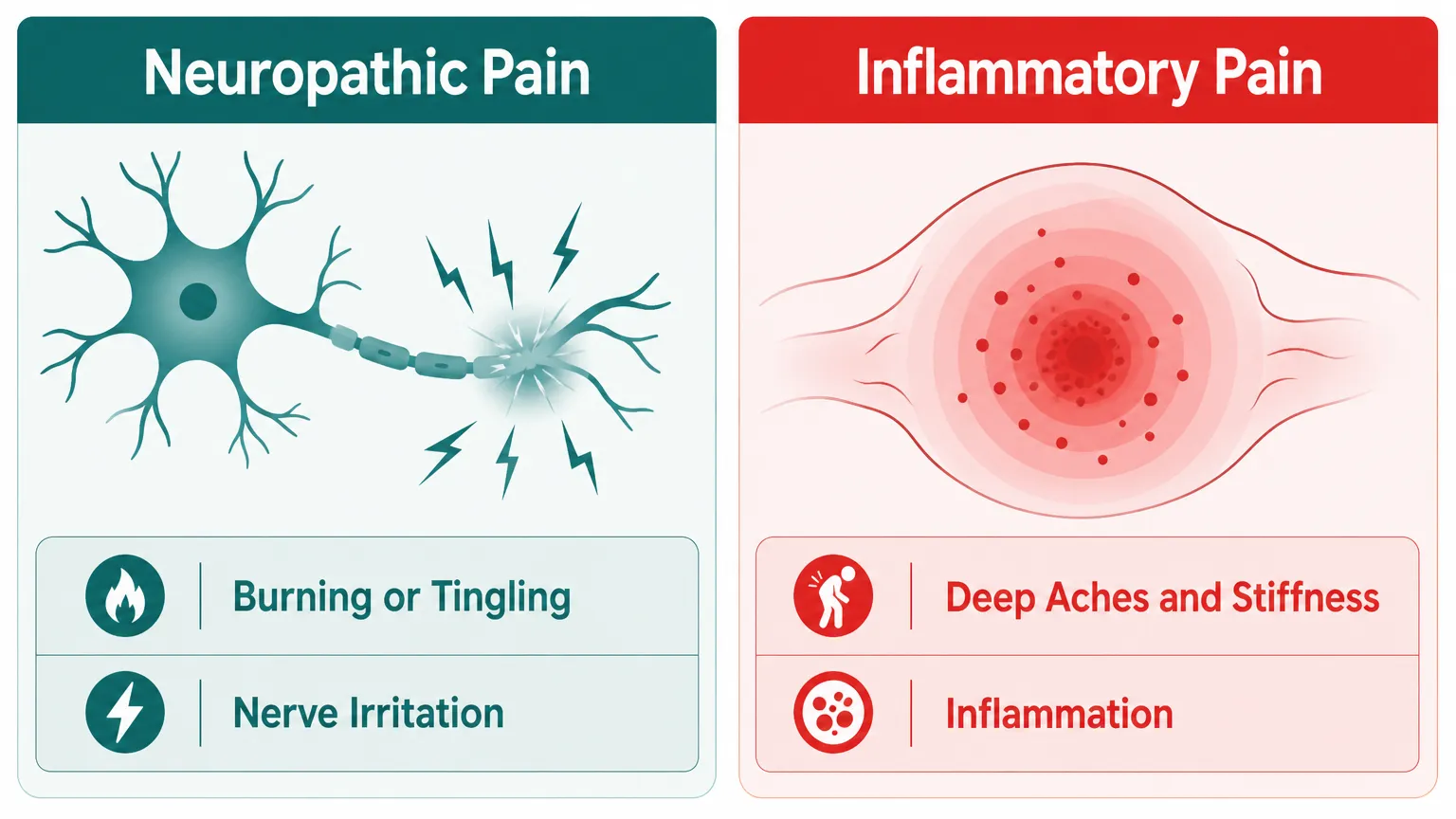
It's often both at once. Long COVID pain can be neuropathic, inflammatory, or a mix, and figuring out which one is driving your symptoms is the first real step in treatment.
Neuropathic pain comes from irritated or damaged nerve fibers. It feels like burning, electric shocks, or pins and needles, and it often shows up in a pattern, like both feet or both hands. Inflammatory pain, on the other hand, tends to feel more like deep aching or stiffness, especially in the joints, and it can flare with activity.
This distinction matters because the medications are different. Gabapentinoids and antidepressant-class nerve medications work on neuropathic pain. Anti-inflammatory strategies work on the inflammatory piece. Most long COVID patients need a plan that addresses both, not one or the other.
What Is the Best Long COVID Chronic Pain Treatment?
There isn't one single best treatment. The strongest approach to long COVID chronic pain treatment combines several tools at once, matched to your specific symptoms, rather than relying on one medication or one procedure alone.
The American Society of Regional Anesthesia and Pain Medicine (ASRA) puts it plainly:
"Post-COVID pain management likely will involve various combinations of physical and occupational rehabilitation, mental health support and therapy, selective serotonin-norepinephrine reuptake inhibitors, antineuropathics, anti-inflammatory agents, and interventions such as targeted sympathetic blocks."
That's a mouthful, but the idea is simple. Because long COVID hits multiple body systems at once, treatment has to be personalized rather than generic. ASRA also notes that management "should be personalized for each patient and include multimodal therapies and interventions that address each of the proposed etiologies."
For patients dealing with existing conditions common in South Texas, like diabetes-related nerve pain or old workplace injuries, the plan has to account for those too. Long COVID pain doesn't exist in a vacuum. It stacks on top of whatever else your body was already managing.
What Medications Are Used for Long COVID Joint Pain?
Doctors generally start long COVID joint and nerve pain treatment with gabapentinoids, certain antidepressant-class medications, and anti-inflammatory agents, adjusting the combination based on how the patient responds.
For neuropathic pain specifically, a peer-reviewed treatment algorithm published in the Journal of Clinical Medicine recommends starting with gabapentinoids (pregabalin or gabapentin), tricyclic antidepressants (amitriptyline or nortriptyline), or SNRIs as first-step options. These work by calming overactive nerve signaling rather than just masking pain.
There's also growing interest in low-dose naltrexone (LDN), used at small daily doses, as part of a non-opioid strategy for chronic inflammatory pain states, according to ASRA's clinical guidance. It's not a fit for everyone, and it's not a fast fix. But for patients who want to avoid opioids entirely, it's worth discussing with your specialist.
For a deeper look at non-opioid options in general, our guide on evidence-based medication strategies beyond opioids covers how these medications get sequenced in practice.
A clinically meaningful outcome in chronic pain care is usually defined as a 20 to 30 percent drop in pain intensity, or about a 2-point improvement on a standard 0 to 10 pain scale, according to that same Journal of Clinical Medicine review. That's not "pain gone." It's pain that's manageable enough to get back to work, sleep through the night, or play with your kids without wincing.
Are Nerve Blocks and Other Interventional Procedures Effective for Long COVID Symptoms?

Nerve blocks and other interventional procedures can help long COVID patients whose pain doesn't respond well enough to medication alone, particularly when there's a nerve or autonomic component driving the symptoms.
Sympathetic nerve blocks, including stellate ganglion blocks, are one of the interventional options ASRA specifically names for post-COVID pain, especially when autonomic dysfunction is part of the picture. Autonomic issues, things like abnormal heart rate response or blood pressure swings tied to post-exertional malaise (PESE), sometimes travel alongside long COVID pain, and a targeted block can calm that overactive signaling.
Epidural steroid injections and radiofrequency ablation (RFA) aren't specific to long COVID, but they remain useful when a patient's underlying spine or joint condition is being aggravated by the post-viral inflammatory state. This is a table, not a written-out list, showing how these procedures generally compare:
| Procedure | How It Works | Relief Window | Recovery Time | Best For |
|---|---|---|---|---|
| Stellate ganglion block | Blocks overactive sympathetic nerve signaling in the neck | Varies, often weeks per injection | Same day, minimal downtime | Autonomic symptoms, some neuropathic pain |
| Epidural steroid injection | Reduces inflammation around irritated spinal nerves | Weeks to a few months, varies by patient | 1-2 days | Radiating back or leg pain flared by inflammation |
| Radiofrequency ablation | Interrupts pain signals from a specific nerve using heat | Several months to longer, varies | Few days | Chronic joint or spine pain not responding to injections |
| Low-dose naltrexone | Modulates inflammatory and pain pathways at the cellular level | Gradual, ongoing while on the medication | None, oral medication | Chronic inflammatory pain, non-opioid preference |
None of these are a cure. They're tools that buy relief and function while the rest of the recovery plan, medication, rehab, and time, does its work.
Does Physical Therapy Help with Long COVID Pain?

Yes. Physical and occupational rehabilitation is one of the core pillars of long COVID pain treatment named by ASRA, and it helps restore movement and function that pain and fatigue have limited.
The catch with long COVID is that standard "push through it" rehab advice can backfire. Post-exertional malaise means some patients feel worse, not better, after overdoing physical activity. A good rehab plan for long COVID pain is graded. It starts light, tracks your response, and only increases intensity once your body shows it can handle it without a crash the next day.
For patients whose pain started with, or was worsened by, sports activity or a physical job, the same graded-return principles apply. Our article on preventing chronic pain development in athletes and active patients walks through how structured progression works in practice.
Multimodal Care: Combining Treatments for Better Outcomes
Long COVID pain responds better to layered care than to any single fix. That's the consistent message across the clinical literature on this condition.
"This condition's mixed causes mean treatment has to be personalized. We usually start with medication and rehab together, and add interventional options like nerve blocks when a patient's pain has a clear nerve or inflammatory driver that isn't settling on its own."
, Dr. Rehan Memon, Board-certified pain specialist and anesthesiologist with 25+ years of experience
A review in Cureus put it directly, noting that continuing structured pain management protocols is "highly recommended to avoid the negative impacts on the patients with more suffering, disability, and psychological stresses." In plain terms, stopping treatment early because progress feels slow tends to make things worse, not better.
Mental health support matters here too, and it's not an afterthought. Chronic pain and depression or anxiety feed each other. Addressing both at once, sometimes alongside gentle mind-body practices, tends to produce steadier improvement than treating pain in isolation.
Can Long COVID Cause Permanent Nerve Damage?
For some patients, yes, long COVID can cause nerve pain that persists long-term, though outcomes vary and many patients see improvement over time with the right treatment.
The honest answer is that researchers are still mapping out exactly how long this nerve involvement lasts in every patient. What's clear from the NIH is that neuropathic pain from PASC can persist for months to years in some people. That doesn't mean it's permanent for everyone, or that nothing can be done. It means early, consistent treatment, starting nerve-directed medication and rehab sooner rather than later, gives you the best shot at limiting how entrenched the pain becomes.
How Long Does Post-COVID Pain Last?
Post-COVID pain can last anywhere from a few weeks to several years, and the timeline depends on the type of pain, how early treatment started, and each patient's overall health.
As of the most recent CDC data, roughly 6% of U.S. adults, an estimated 15 million people, reported currently experiencing long COVID symptoms, with a real portion of them dealing with ongoing pain. Some patients see steady improvement within months. Others have a longer road, especially if there's an underlying condition, like diabetic neuropathy or an old spine injury, complicating the picture.
Fair warning: recovery isn't always a straight line. Patients often improve, plateau for a while, then improve again once a treatment adjustment kicks in. That's normal, not a sign the plan has failed.
What Doctor Should I See for Long COVID Pain?
For persistent post-COVID pain, especially pain that hasn't responded to your primary care doctor's initial approach, a board-certified pain management specialist is usually the right next step.
A pain specialist can distinguish neuropathic pain from inflammatory pain, order the right imaging or nerve studies, and build a layered treatment plan that includes medication, rehab referrals, and interventional procedures when needed. If your pain involves autonomic symptoms (dizziness, heart rate changes) alongside pain, your specialist may also coordinate with cardiology or neurology.
Long COVID, Personal Injury, and Occupational Pain in Laredo
Here's something the national long COVID guides tend to skip entirely: a lot of Laredo patients are dealing with post-COVID pain on top of pain from a car wreck or a work injury, and untangling which symptom came from which event matters, especially for insurance and legal purposes.
South Texas's border economy runs on physically demanding work, oil and gas, freight and logistics, ranching, international trade. A worker who developed long COVID joint pain and then got rear-ended on the highway now has two overlapping pain sources that need to be documented separately by a specialist who understands both.
If you're dealing with pain from a motor vehicle accident, our guide on why pain management is the step most patients skip after a car accident in Laredo explains why early evaluation protects both your health and your claim. And if you're still waiting on a settlement, know that Texas's statute of limitations for personal injury claims is 2 years from the date of injury (Texas Civil Practice & Remedies Code § 16.003), so there's usually more time than people assume, but it's still not something to sit on.
Pain Management of Laredo accepts Letters of Protection (LOP), which means patients involved in an accident claim can start interventional pain treatment now, before the case settles, instead of waiting months for a check that hasn't arrived yet.
Finding Long COVID Pain Treatment in Laredo, Texas
Webb County residents have historically had thin options for advanced, interventional pain care without driving to San Antonio or Houston. That's changed. Dr. Memon's practice on McPherson Road offers the same nerve blocks, epidural injections, and multimodal medication management available at bigger-city clinics, without the two-hour drive.
For patients out in Rio Bravo, El Cenizo, or the rural outskirts of Webb County, telemedicine visits make follow-up care and medication management possible without a trip into town for every appointment. And because so many patients here are bilingual, care is available in both English and Spanish. Se habla español.
What to Expect: Setting Realistic Goals for Pain Reduction
Long COVID pain treatment is rarely about eliminating pain completely. It's about getting pain down to a level where you can function, work, and sleep, and that usually means tracking meaningful, incremental improvement rather than expecting an overnight fix.
That 20 to 30 percent reduction benchmark mentioned earlier isn't a disappointing number. For someone who couldn't sleep through the night or make it through a work shift, that kind of improvement changes daily life. Your specialist will track your response over several weeks, adjust medications or add interventional options as needed, and reassess. It's a process, not a single appointment.
Frequently Asked Questions
Can long COVID pain go away on its own without treatment?
Some mild post-COVID pain does improve without formal treatment as inflammation settles over time. But pain that's neuropathic in nature, burning, tingling, or shock-like, rarely resolves fully without targeted medication or intervention, and waiting too long can make nerve pain harder to treat.
Is long COVID chronic pain covered by insurance in Texas?
Most medically necessary treatments for diagnosed post-COVID pain, including medication management and interventional procedures, are billable through standard health insurance, Medicare, or Medicaid, though prior authorization requirements vary by plan and by procedure. Our office can help verify coverage before treatment starts.
Can long COVID make existing chronic pain conditions worse?
Yes. Patients with pre-existing conditions like diabetic neuropathy, arthritis, or old musculoskeletal injuries commonly report that long COVID heightens their baseline pain rather than creating an entirely separate problem. Treatment plans need to address both the pre-existing condition and the post-COVID component together.
What's the difference between long COVID fatigue and long COVID pain?
They're related but distinct. Fatigue is the most commonly reported lingering long COVID symptom and often involves post-exertional malaise, where activity triggers a crash. Pain can occur with or without that fatigue pattern, and the two often need separate management strategies within the same overall treatment plan.
Should I try physical therapy before medication for long COVID pain?
There's no strict order. Many patients do both at once, since rehab and medication address different parts of the problem. Your specialist will usually recommend starting medication for pain control while introducing graded physical activity slowly enough to avoid triggering post-exertional malaise.
If you're dealing with lingering muscle, joint, or nerve pain after COVID-19, don't wait for it to resolve on its own. Pain Management of Laredo, located at 8511 McPherson Rd Ste. 204, Laredo, TX 78045, offers evidence-based, multimodal treatment for long COVID pain, including medication management, nerve blocks, and rehabilitation referrals, with Letters of Protection accepted for accident-related cases and care available in English and Spanish. Call (956) 962-7173 to schedule a consultation.
Written and medically reviewed by Dr. Rehan Memon, Board-certified pain specialist and anesthesiologist with 25+ years of experience
Last reviewed: September 2026
This article is for informational purposes only and does not constitute medical advice. Please consult a qualified healthcare provider for diagnosis and treatment.