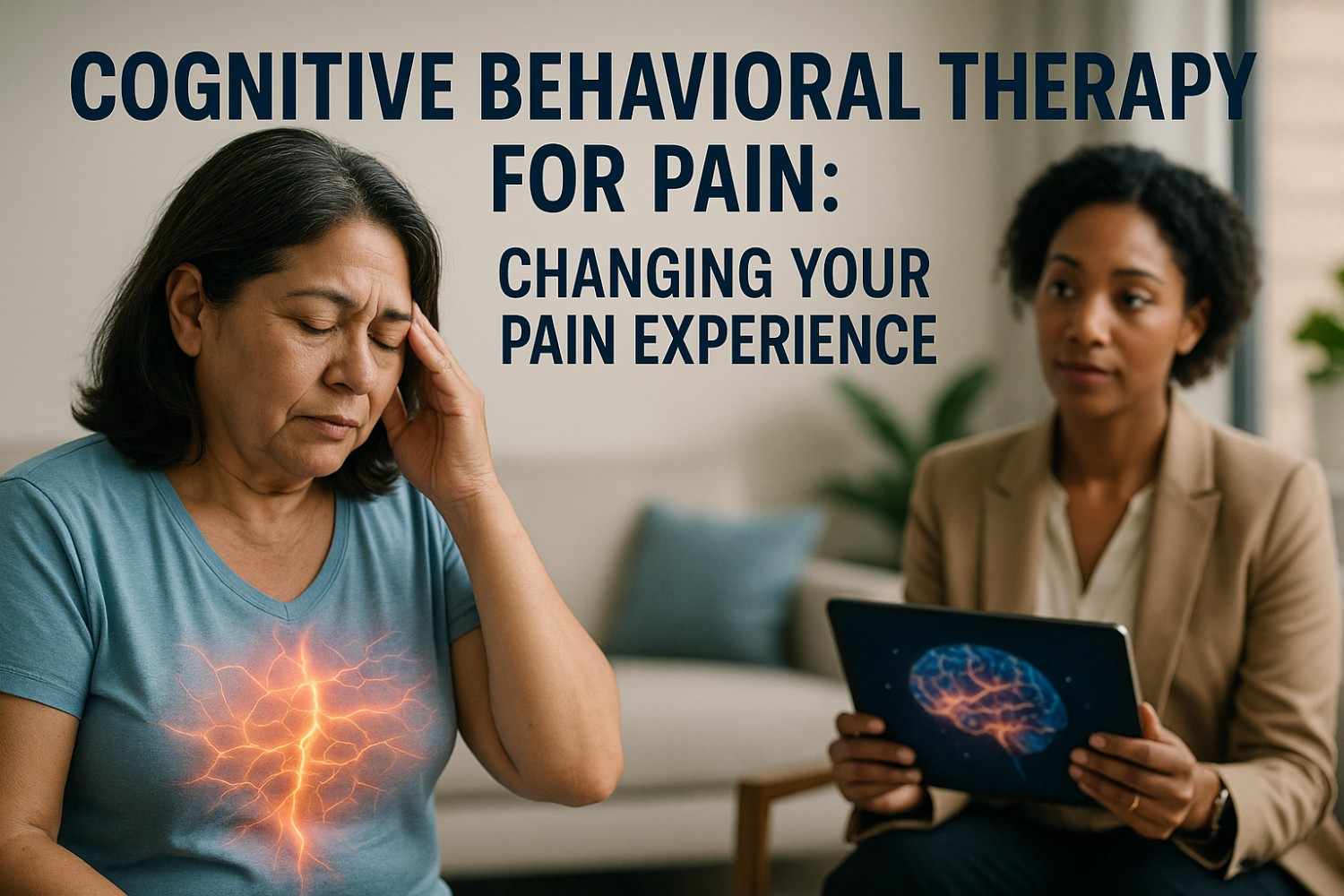
Cognitive Behavioral Therapy for Pain: Changing Your Pain Experience
Cognitive Behavioral Therapy for Pain: Changing Your Pain Experience in Laredo
Chronic pain affects millions, and for many in Laredo, it's a daily battle that impacts every facet of life. While medical treatments address the physical aspects of pain, Cognitive Behavioral Therapy (CBT) offers a powerful, evidence-based psychological approach that can fundamentally change how you experience and manage pain. At Pain Management Laredo, we integrate CBT as a core component of our comprehensive pain treatment plans, empowering patients to reclaim their lives from the grip of chronic pain.
Understanding the Vicious Cycle of Chronic Pain
Chronic pain is more than just a physical sensation; it's a complex experience interwoven with thoughts, emotions, and behaviors. Often, individuals with chronic pain find themselves caught in a vicious cycle:
- Pain Sensation: The initial and ongoing physical discomfort.
- Negative Thoughts (Cognitions): "This pain will never end," "I can't do anything anymore," "I'm a burden to my family." These thoughts, common among Laredo residents facing chronic pain, can be automatic and deeply ingrained.
- Distressing Emotions: Feelings of frustration, sadness, anxiety, anger, hopelessness, and depression arise from the pain and negative thoughts.
- Unhelpful Behaviors: Avoiding activities, social withdrawal, over-reliance on medication, poor sleep patterns, and reduced physical activity. These behaviors, while understandable, often worsen pain and reduce quality of life.
This cycle can intensify pain, increase disability, and diminish overall well-being. CBT works by targeting the cognitive and behavioral components of this cycle, helping Laredo patients develop healthier ways of thinking and acting in response to pain.
What is Cognitive Behavioral Therapy (CBT)?
CBT is a structured, goal-oriented type of psychotherapy that helps individuals identify and modify unhelpful thinking patterns (cognitions) and behaviors. The core principle of CBT is that our thoughts, feelings, and behaviors are interconnected, and by changing one, we can influence the others. In the context of pain management, CBT does not aim to eliminate pain entirely, but rather to:
- Reduce the suffering and distress associated with pain.
- Improve physical functioning and daily activity levels.
- Decrease reliance on pain medication where appropriate.
- Enhance coping skills and self-efficacy in managing pain.
- Improve overall quality of life for Laredo individuals with chronic pain.
CBT is typically a short-term therapy, often involving 8-16 sessions, though the duration can be tailored to individual needs. It's a collaborative process where the therapist and patient work together as a team.
Key Components of CBT for Chronic Pain in Laredo
A CBT program for chronic pain, like those offered at Pain Management Laredo, typically incorporates several key components:
1. Psychoeducation and Pain Neuroscience Education (PNE)
Understanding pain is the first step towards managing it effectively. Our Laredo patients learn about:
- The difference between acute and chronic pain: Acute pain is a warning signal of tissue damage, while chronic pain often persists after tissues have healed, involving changes in the nervous system.
- The pain cycle: How thoughts, feelings, and behaviors interact to maintain or worsen pain.
- Pain neuroscience: How the brain and nervous system process pain signals, including concepts like central sensitization (where the nervous system becomes overly sensitive). This helps Laredo patients understand that pain is not always a direct measure of tissue damage.
- The role of CBT: How changing thoughts and behaviors can alter pain perception and improve function.
This education demystifies pain and provides a rationale for the CBT techniques, empowering patients to take an active role in their treatment.
2. Identifying and Modifying Unhelpful Thoughts (Cognitive Restructuring)
This is a cornerstone of CBT. Laredo patients learn to:
- Become aware of automatic negative thoughts (ANTs) related to pain (e.g., "I'll never get better," "This pain is unbearable").
- Identify cognitive distortions: Common errors in thinking that fuel negativity, such as:
- Catastrophizing: Expecting the worst-case scenario (e.g., "This flare-up means my condition is rapidly deteriorating").
- Overgeneralization: Drawing broad conclusions from a single event (e.g., "I couldn't go shopping today, so I'll never be able to shop independently again").
- All-or-Nothing Thinking: Seeing things in black-and-white terms (e.g., "If I can't do everything I used to, I'm a complete failure").
- Personalization: Blaming oneself for events outside one's control.
- Challenge and evaluate these thoughts: Examining the evidence for and against them. Asking questions like, "Is this thought 100% true?" "What's another way to look at this situation?"
- Develop more balanced and helpful alternative thoughts: Replacing negative, distorted thoughts with more realistic and adaptive ones (e.g., "This flare-up is temporary, and I have strategies to manage it," instead of "This pain will never end").
This process helps Laredo patients reduce the emotional impact of pain and fosters a more optimistic and resilient mindset.
3. Behavioral Activation and Graded Activity
Chronic pain often leads to activity avoidance, which can result in deconditioning, increased pain, and a shrinking world. CBT addresses this through:
- Activity Pacing: Learning to balance activity and rest to avoid the "boom-and-bust" cycle (overdoing it on good days, then crashing). This involves breaking down tasks into manageable parts and taking scheduled breaks. For Laredo residents, this might mean pacing activities like gardening in the Texas heat or attending local events.
- Graded Exposure/Activity Scheduling: Gradually reintroducing activities that have been avoided due to pain. Starting with small, achievable goals and slowly increasing the duration or intensity of activities. This builds confidence and demonstrates that movement is not always harmful.
- Goal Setting: Collaboratively setting specific, measurable, achievable, relevant, and time-bound (SMART) goals related to daily functioning and valued activities. These goals are often focused on improving function rather than solely on pain reduction.
- Pleasurable Activity Scheduling: Making time for enjoyable activities, even if they need to be modified. This helps improve mood and provides a distraction from pain.
These approaches are particularly valuable for our Laredo patients who have developed significant activity limitations due to chronic pain, helping them gradually reclaim function while minimizing pain flares.
4. Relaxation Training and Stress Management
Stress and muscle tension can significantly exacerbate pain. CBT teaches various techniques to promote relaxation and manage stress, which are particularly important for Laredoans navigating daily life stressors:
- Diaphragmatic (Deep) Breathing: Learning to breathe slowly and deeply from the diaphragm to calm the nervous system.
- Progressive Muscle Relaxation (PMR): Systematically tensing and relaxing different muscle groups to release physical tension.
- Guided Imagery: Using mental images of peaceful and relaxing scenes to promote a state of calm.
- Mindfulness Meditation: Paying attention to the present moment without judgment. This can include mindfulness of breath, body sensations, or even pain itself, changing one's relationship to the sensation.
- Stress-Management Skills: Problem-solving, time management, and assertive communication skills to manage daily stressors effectively.
These techniques help reduce physiological arousal, decrease muscle tension, and provide a sense of control over the body's response to pain.
5. Developing Coping Skills
CBT equips Laredo patients with a toolkit of coping strategies to manage pain flare-ups and challenging situations:
- Problem-Solving Skills: A structured approach to identifying problems related to pain (e.g., difficulty sleeping, managing household chores) and brainstorming potential solutions.
- Attention Management/Distraction Techniques: Learning to shift attention away from pain towards engaging or pleasant activities or sensations.
- Acceptance Strategies: While not resignation, acceptance in CBT involves acknowledging the aspects of pain that cannot be changed and focusing energy on improving quality of life despite the pain. This is often integrated from Acceptance and Commitment Therapy (ACT) principles.
- Flare-Up Planning: Developing a specific plan for how to manage increases in pain, including coping strategies, medication use (if prescribed), and when to seek help.
6. Sleep Hygiene Education
Pain and poor sleep often go hand-in-hand, creating another vicious cycle. CBT addresses sleep problems by teaching Laredo patients about healthy sleep habits:
- Maintaining a consistent sleep-wake schedule.
- Creating a relaxing bedtime routine.
- Optimizing the sleep environment (dark, quiet, cool).
- Avoiding stimulants like caffeine and nicotine close to bedtime.
- Limiting daytime naps.
- Using the bed only for sleep and intimacy.
7. Relapse Prevention
Towards the end of therapy, the focus shifts to maintaining progress and managing future challenges. This involves:
- Reviewing the skills learned and how they have been helpful.
- Identifying potential high-risk situations or triggers for pain flare-ups or unhelpful coping.
- Developing a plan for how to manage setbacks.
- Knowing when and how to seek additional support if needed.
This ensures that Laredo patients feel equipped to continue using CBT strategies independently after therapy concludes.
How CBT Changes the Brain's Experience of Pain
Emerging research, including neuroimaging studies, suggests that CBT can lead to actual changes in brain structure and function related to pain processing. While pain signals may still originate from the body, CBT can influence:
- Emotional Regulation Centers: Strengthening areas of the brain involved in managing emotions like fear and anxiety, which can amplify pain.
- Cognitive Control Networks: Enhancing the brain's ability to modulate attention and interpret pain sensations in a less threatening way.
- Pain Modulation Pathways: Improving the functioning of the body's natural pain-relief systems.
By changing thought patterns and behaviors, CBT helps "retrain" the brain to respond differently to pain signals, reducing their intensity and emotional impact. For Laredo residents, this means that while the source of pain might persist, their suffering and disability can be significantly lessened.
Who Can Benefit from CBT for Chronic Pain in Laredo?
CBT can be beneficial for individuals in Laredo experiencing a wide range of chronic pain conditions, including but not limited to:
- Low back pain
- Fibromyalgia
- Arthritis (Osteoarthritis and Rheumatoid Arthritis)
- Headaches and migraines
- Neuropathic pain (nerve pain)
- Chronic pelvic pain
- Temporomandibular joint (TMJ) disorders
- Complex Regional Pain Syndrome (CRPS)
- Irritable Bowel Syndrome (IBS) with associated pain
It is particularly helpful for individuals who:
- Experience significant emotional distress (anxiety, depression, frustration) related to their pain.
- Have found that pain is limiting their daily activities and quality of life.
- Feel that their thoughts about pain are making things worse.
- Are motivated to learn active coping strategies and take a collaborative role in their treatment.
- Wish to reduce reliance on passive treatments or medications.
Finding CBT for Pain in Laredo
At Pain Management Laredo, we recognize the profound impact of psychological factors on chronic pain. Our multidisciplinary approach often includes access to or referrals for CBT with therapists skilled in pain management. When seeking CBT for pain, it's important to find a therapist who has specific training and experience in applying CBT techniques to chronic pain populations.
Things to consider when looking for a CBT therapist in the Laredo area:
- Credentials and Licensing: Ensure the therapist is a licensed mental health professional (e.g., psychologist, licensed clinical social worker, licensed professional counselor).
- Specialization in Pain Management: Ask about their experience and training in working with chronic pain.
- Approach and Philosophy: Discuss their approach to CBT for pain to ensure it aligns with your needs and goals.
- Collaboration with Medical Providers: Ideally, your CBT therapist will be willing to communicate and collaborate with your other healthcare providers at Pain Management Laredo or elsewhere.
What to Expect from CBT Sessions for Pain
CBT sessions are typically structured and active. Here's what Laredo patients can generally expect:
- Initial Assessment: The first session usually involves a detailed discussion of your pain, its impact on your life, your thoughts and feelings about it, and your treatment goals.
- Collaborative Goal Setting: You and your therapist will work together to define specific, achievable goals for therapy.
- Skill Building: Each session will focus on learning and practicing specific CBT skills (e.g., identifying negative thoughts, relaxation techniques, activity pacing).
- Homework Assignments: CBT is an active therapy that involves practicing skills between sessions. This "homework" is crucial for progress and might include thought records, activity logs, or practicing relaxation exercises.
- Regular Review of Progress: You and your therapist will regularly assess your progress towards your goals and adjust the treatment plan as needed.
- Focus on the Present: While past experiences may be discussed to understand current patterns, the primary focus of CBT is on current problems and solutions.
CBT in Conjunction with Other Pain Treatments
CBT is not a replacement for medical treatments for pain but rather a valuable complement. It can be effectively integrated with:
- Medication Management: CBT can help patients manage medications more effectively, adhere to prescribed regimens, and potentially reduce reliance on certain medications (like opioids) by improving coping skills.
- Interventional Procedures: For Laredo patients undergoing procedures like nerve blocks or spinal cord stimulation, CBT can help manage anxiety about procedures and maximize functional gains afterward.
- Physical Therapy: CBT can address fear of movement (kinesiophobia) and help patients adhere to physical therapy exercises, improving outcomes. The cognitive and behavioral strategies learned in CBT can support the active rehabilitation goals of physical therapy.
- Lifestyle Modifications: CBT can support efforts to improve diet, exercise, and sleep, which are all important for pain management.
The team at Pain Management Laredo often recommends a combination of approaches, tailored to each patient's unique needs, to achieve the best possible outcomes.
Potential Challenges and How to Overcome Them
While CBT is highly effective, some Laredo patients may encounter challenges:
- Motivation: Chronic pain can sap energy and motivation. Therapists understand this and work to build motivation incrementally. Starting with small, manageable steps is key.
- Skepticism: Some may be skeptical that a "talking therapy" can help physical pain. Understanding the neuroscience of pain and how thoughts and emotions influence pain perception can help. Giving it a fair trial is often convincing.
- Time Commitment: Attending sessions and doing homework requires time. Discussing practicalities with the therapist can help integrate CBT into a busy Laredo lifestyle.
- Emotional Discomfort: Discussing difficult thoughts and feelings can be uncomfortable initially. However, therapists create a supportive environment, and this discomfort usually lessens as coping skills develop.
Conclusion: Taking Control of Your Pain Experience in Laredo
Chronic pain can feel overwhelming, but Cognitive Behavioral Therapy offers a scientifically supported path to changing your relationship with pain. By learning to identify and modify unhelpful thoughts and behaviors, Laredo residents can reduce their suffering, improve their ability to function, and enhance their overall quality of life. CBT empowers you with practical skills to manage pain more effectively, moving from feeling like a victim of pain to an active agent in your own well-being.
If you are in Laredo and struggling with chronic pain, consider discussing Cognitive Behavioral Therapy with your healthcare provider at Pain Management Laredo. It could be a crucial step in your journey towards a life less defined by pain and more focused on what truly matters to you. Remember, while pain may be a part of your life, it doesn't have to be the entirety of your story.