
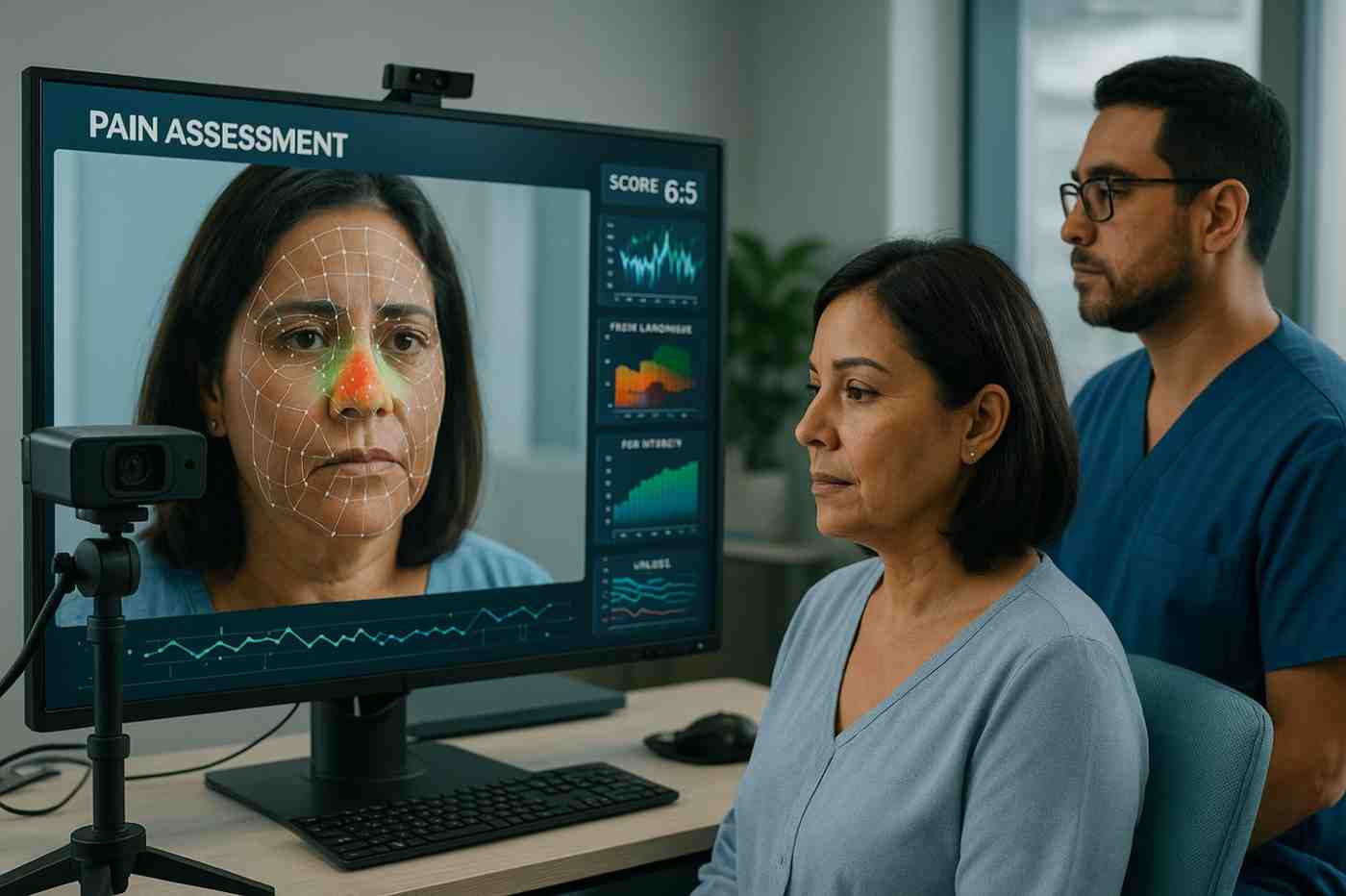
AI in Pain Assessment: Facial Recognition Tools for Objective Measurement
AI in Pain Assessment: Facial Recognition Tools for Objective Measurement
Pain assessment has historically relied on subjective self-reporting—patients rating their pain on a numerical scale or pointing to faces on a chart. While these methods remain important, they're limited by communication barriers, cognitive impairment, unconsciousness, age, and the inherent difficulty of translating a complex sensory and emotional experience into a single number. At Pain Management Laredo, we're watching with great interest as artificial intelligence and facial recognition technology emerge as revolutionary tools for objective pain measurement. For patients in Laredo, TX and Webb County, these innovations promise more accurate pain assessment, personalized treatment optimization, and improved outcomes, particularly for vulnerable populations who struggle to communicate their pain.
The Challenge of Subjective Pain Measurement
Traditional pain assessment methods, while valuable, have significant limitations that AI technology seeks to address:
Limitations of Self-Reporting
- Numerical Rating Scale Inconsistency: Asking patients to rate pain from 0-10 produces highly variable results; one patient's "7" may be another's "4," making comparisons and tracking unreliable.
- Communication Barriers: Non-verbal patients, those with cognitive impairment, infants and children, and individuals with language differences struggle to effectively communicate pain intensity.
- Cultural Differences: Pain expression and reporting vary dramatically across cultures; some populations in Laredo's diverse community may minimize pain reporting while others express it more openly.
- Recall Bias: When asked about pain during a clinic visit, patients must remember and summarize pain from days or weeks, leading to inaccurate reporting.
- Social Desirability Bias: Patients may under-report pain to avoid being perceived as complaining or over-report to ensure treatment is taken seriously.
- Unconscious Patients: Critical care settings require pain assessment in sedated or unconscious individuals who cannot self-report.
Observer Assessment Challenges
- Subjective Interpretation: Healthcare providers observing behavioral pain indicators (facial expressions, body posture, vocalizations) interpret them through their own perceptual filters.
- Inter-Rater Reliability: Different observers watching the same patient may provide dramatically different pain assessments.
- Implicit Bias: Research demonstrates that healthcare providers systematically underestimate pain in certain demographic groups, particularly racial and ethnic minorities.
- Time Constraints: Busy clinical environments limit the time available for careful pain observation and assessment.
Pain Management Laredo recognizes these assessment challenges in our Laredo practice and is exploring how AI-based tools may complement traditional methods to provide more accurate, objective pain measurement.
How AI Facial Recognition Analyzes Pain
Artificial intelligence pain assessment systems use sophisticated machine learning algorithms trained on thousands of facial expressions to detect subtle pain indicators:
Facial Action Coding System (FACS)
- Micro-Expression Detection: AI systems identify minute facial muscle movements that occur automatically during pain experiences—brow lowering, eye narrowing, nose wrinkling, upper lip raising, and other specific action units.
- Action Unit Patterns: Research has identified specific combinations of facial action units consistently associated with pain across diverse populations and pain types.
- Temporal Analysis: AI tracks how facial expressions change over time, detecting pain-related patterns in the timing, duration, and intensity of muscle movements.
- Baseline Comparison: Advanced systems establish an individual's baseline facial patterns and detect deviations indicating pain onset or intensification.
- Involuntary Expressions: AI focuses on micro-expressions that occur automatically and are difficult to consciously suppress, reducing the impact of social desirability bias.
Machine Learning Architecture
- Deep Learning Networks: Convolutional neural networks (CNNs) and other deep learning architectures process facial images, learning to identify pain-related patterns through training on labeled datasets.
- Multi-Modal Integration: Advanced systems combine facial expression analysis with other pain indicators—body movement, vocalization patterns, physiological signals (heart rate, skin conductance)—for comprehensive assessment.
- Continuous Learning: AI systems improve accuracy over time as they analyze more patients, refining their pain detection algorithms through ongoing training.
- Real-Time Processing: Modern AI systems analyze video feeds in real-time, providing continuous pain monitoring rather than single time-point assessments.
- Individual Calibration: Some systems personalize their algorithms to individual patients, learning each person's unique pain expression patterns for enhanced accuracy.
Clinical Applications in Pain Management
AI-powered pain assessment tools are being deployed across multiple healthcare settings with promising results:
Critical Care and Perioperative Settings
- Post-Surgical Pain Monitoring: Continuous facial recognition analysis in recovery rooms detecting pain in patients unable to communicate, triggering alerts for nursing staff to provide analgesia.
- ICU Pain Assessment: Monitoring sedated or mechanically ventilated patients in intensive care units, where traditional pain scales are impossible to use but adequate analgesia remains critical.
- Pediatric Pain Management: Assessing pain in infants and young children who cannot verbalize their pain experience, improving pain control during procedures and recovery.
- Anesthesia Depth Monitoring: Detecting inadequate anesthesia or analgesia during surgery by recognizing pain-associated facial expressions even in anesthetized patients.
- Emergency Department Triage: Objective pain assessment helping triage decisions in emergency departments where rapid, accurate pain evaluation is essential.
Chronic Pain Management
- Treatment Response Tracking: Monitoring facial pain expressions before and after interventions (medications, nerve blocks, physical therapy) to objectively measure treatment effectiveness.
- Home-Based Monitoring: Smartphone apps or home cameras using AI to track pain patterns throughout the day, providing clinicians with detailed data on pain fluctuations.
- Medication Optimization: Using objective pain measurement to fine-tune medication dosing, timing, and combinations for individual patients in Laredo.
- Functional Assessment: Analyzing pain expressions during specific activities to identify movement patterns or tasks that trigger pain, guiding rehabilitation strategies.
- Clinical Trial Endpoints: Providing objective, reproducible pain measurements in research studies evaluating new pain treatments.
Special Populations
- Dementia and Cognitive Impairment: Assessing pain in Alzheimer's disease and other conditions where verbal communication is compromised, ensuring adequate pain control in vulnerable populations.
- Autism Spectrum Disorders: Measuring pain in individuals with autism who may process and communicate pain differently than neurotypical individuals.
- Language Barriers: Providing objective assessment when patient and provider don't share a common language, particularly relevant in Laredo's bilingual community.
- Burn Patients: Monitoring pain during extremely painful dressing changes in burn units, optimizing pre-procedure analgesia.
- Palliative and End-of-Life Care: Ensuring comfort in dying patients who may be unable to communicate their pain needs.
While widespread clinical adoption is still emerging, Pain Management Laredo follows these developments closely and anticipates incorporating AI-based assessment tools as they become validated and available for routine clinical use.
Evidence and Validation Studies
Research investigating AI pain assessment accuracy has produced encouraging results:
Performance Metrics
- High Correlation with Self-Report: Studies comparing AI pain predictions to patient self-ratings show correlation coefficients of 0.7-0.85, indicating strong agreement.
- Superior to Observer Assessment: AI systems demonstrate better inter-rater reliability than human observers and reduce implicit bias in pain assessment.
- Cross-Cultural Validation: Research across diverse populations suggests that core pain-related facial expressions are universal, allowing AI systems trained on one population to work across ethnic and cultural groups.
- Age Independence: Validated systems work across the lifespan from neonates to geriatric patients, though some require age-specific calibration.
- Pain Type Distinction: Emerging evidence suggests AI may eventually distinguish different pain types (sharp, burning, aching) based on subtle differences in facial expression patterns.
Landmark Research
- UNBC-McMaster Shoulder Pain Database: Foundational dataset of individuals with shoulder pain that has been used to train and validate numerous AI pain assessment systems.
- Neonatal Pain Assessment: Studies using AI to detect pain in newborns during heel stick procedures showing 90%+ accuracy compared to validated neonatal pain scales.
- Post-Operative Pain Studies: Research in surgical recovery demonstrating AI can predict pain scores and identify patients needing additional analgesia before they report distress.
- Chronic Pain Populations: Validation studies in fibromyalgia, osteoarthritis, and other chronic pain conditions showing AI assessment correlates with disease severity and functional impairment.
Benefits for Laredo Patients
AI-powered pain assessment offers specific advantages for the Webb County population:
Reducing Health Disparities
- Minimizing Implicit Bias: Objective measurement reduces the impact of provider bias that has been documented to result in undertreatment of pain in Hispanic and other minority populations.
- Language-Independent Assessment: Facial recognition works regardless of language spoken, eliminating communication barriers between English and Spanish speakers or those with limited proficiency in either language.
- Consistent Standards: Every patient receives the same objective assessment rather than variable evaluation based on provider experience, training, or unconscious assumptions.
- Documentation of Pain: Objective data creates stronger medical records supporting the reality and severity of pain, particularly important for workers' compensation and disability claims.
Personalized Treatment
- Individual Pain Patterns: Continuous monitoring reveals when during the day pain peaks, how long relief from medications lasts, and which activities trigger flares—information difficult to capture through periodic self-reporting.
- Treatment Titration: Objective measurement allows Pain Management Laredo physicians to more precisely adjust medication doses, finding the minimum effective dose that provides adequate relief.
- Early Intervention: Detecting pain increases before patients consciously recognize escalation, allowing preventive treatment rather than reactive crisis management.
- Comparative Analysis: Comparing an individual patient's facial pain expressions before and after interventions provides clear, objective evidence of treatment benefit.
Limitations and Challenges
Despite promise, AI pain assessment faces important limitations that must be acknowledged:
Technical Limitations
- Facial Injury or Paralysis: Systems relying on facial expressions cannot assess pain in patients with facial trauma, Bell's palsy, or conditions affecting facial muscle function.
- Masking Behaviors: Some individuals consciously or unconsciously control facial expressions to hide pain, potentially fooling AI systems just as they fool human observers.
- Image Quality Requirements: Lighting, camera angle, facial obstructions (oxygen masks, surgical drapes), and image resolution affect system accuracy.
- Computational Resources: Real-time AI analysis requires substantial computing power, potentially limiting deployment in resource-constrained healthcare settings.
- Limited Pain Type Specificity: Current systems detect pain presence and intensity but generally cannot distinguish neuropathic from nociceptive pain or identify specific pain locations.
Ethical and Privacy Concerns
- Surveillance Concerns: Continuous facial monitoring raises privacy issues and potential for misuse beyond pain assessment.
- Consent and Autonomy: Questions about when and how to obtain patient consent for AI-based monitoring, particularly in unconscious or cognitively impaired individuals.
- Data Security: Facial recognition data requires robust protection to prevent breaches, unauthorized access, or identification of individuals.
- Algorithmic Bias: If training datasets don't represent diverse populations, AI systems may perform poorly for underrepresented groups—potentially perpetuating rather than reducing disparities.
- Over-Reliance Risk: Danger of providers trusting AI assessments over patient self-report, potentially dismissing patients who report pain not detected by algorithms.
Implementation Barriers
- Cost: AI systems require investment in cameras, software, computing infrastructure, and training that may be prohibitive for smaller practices.
- Workflow Integration: Incorporating AI assessment into clinical workflows without disrupting efficiency or adding provider burden.
- Regulatory Approval: Many AI pain assessment tools are still investigational, awaiting FDA clearance or approval for clinical use.
- Provider Training: Healthcare teams need education on interpreting AI-generated pain scores and integrating them with other clinical information.
- Reimbursement Uncertainty: Insurance coverage for AI-based pain assessment remains unclear, potentially limiting adoption.
Pain Management Laredo recognizes these limitations and views AI as a complementary tool enhancing, not replacing, traditional pain assessment methods and the patient-provider relationship.
The Future of AI Pain Assessment
Ongoing research and development promise increasingly sophisticated pain measurement capabilities:
Emerging Technologies
- Multimodal Integration: Combining facial recognition with voice analysis, movement tracking, physiological monitoring, and even thermal imaging for comprehensive pain assessment.
- Predictive Analytics: AI systems that not only measure current pain but predict impending flares based on subtle expression changes, enabling preventive interventions.
- Pain Type Classification: Next-generation algorithms that distinguish burning from stabbing pain, neuropathic from inflammatory pain, based on expression patterns.
- Emotion-Pain Separation: Advanced systems learning to differentiate pain-related facial expressions from those caused by other emotions like fear, anxiety, or sadness.
- Wearable Integration: Miniaturized cameras and processors embedded in glasses or headbands providing continuous ambulatory pain monitoring.
Research Directions
- Large-Scale Validation: Ongoing multi-center trials establishing AI pain assessment accuracy across diverse populations and settings.
- Personalization Algorithms: Research into individually calibrated systems that learn each patient's unique pain expression patterns.
- Pediatric Refinement: Age-specific algorithms optimized for neonatal, infant, child, and adolescent pain assessment.
- Chronic Pain Phenotyping: Using AI to identify subgroups of chronic pain patients with similar pain expression patterns who may respond to specific treatments.
- Treatment Prediction: Research investigating whether AI pain assessment can predict which treatments will work for individual patients.
Preparing for AI Integration in Laredo
As AI pain assessment tools transition from research to clinical practice, Pain Management Laredo is preparing to thoughtfully integrate these technologies:
Our Approach
- Evidence-Based Adoption: We will implement AI tools only after robust validation studies demonstrate accuracy, reliability, and benefit for patient care.
- Complementary Use: AI assessment will supplement, not replace, patient self-reporting and clinical judgment in our comprehensive pain evaluation.
- Patient Education: When AI tools are deployed, we will thoroughly explain to Laredo patients how they work, their limitations, and how the data will be used.
- Equity Focus: We will ensure AI systems used in our practice have been validated in Hispanic and other populations reflecting Webb County demographics.
- Privacy Protection: Implementation will include robust data security measures and clear policies on facial recognition data storage, use, and retention.
The integration of artificial intelligence into pain assessment represents one of the most promising innovations in pain medicine, offering objective measurement that could reduce bias, improve treatment precision, and enhance outcomes. For patients in Laredo struggling to communicate their pain or facing barriers to adequate treatment, AI-powered assessment may provide the objective validation their suffering deserves.
While widespread clinical use is still emerging, Pain Management Laredo remains at the forefront of understanding these innovations and stands ready to incorporate validated AI tools when they become available. Whether you're experiencing pain that's difficult to describe, struggling with communication barriers, or seeking the most advanced pain assessment available, our commitment is to provide comprehensive, cutting-edge care that combines technological innovation with compassionate, patient-centered medicine.
If you're experiencing chronic pain in Laredo and want to explore advanced pain assessment and treatment options, contact Pain Management Laredo to schedule a comprehensive evaluation. We combine current best practices with forward-looking innovation to provide you with the most effective, personalized pain management available.